Reina Yoshizaki
Events
Reina Yoshizaki
The University of Tokyo, Japan
Ultrashort-Pulse Laser Processing of Hard and Brittle Materials for Deterministic 3D Structuring: Diamond as a Case Study & Formation Mechanisms of Internal Modification and Optical Waveguides in Quar
Ultrashort-Pulse Laser Processing of Hard and Brittle Materials for Deterministic 3D Structuring: Diamond as a Case Study
Hard and brittle materials are difficult to machine with conventional tools, while lasers enable processing without mechanical contact. Lasers producing ultrashort pulses are particularly suitable for precise processing of transparent materials, including glass and diamond, because they can minimize thermal damage. However, achieving both high processing efficiency and high accuracy remains challenging. Using diamond as an example, this lecture introduces approaches toward deterministic structuring in three dimensions. The focus is on controlling the spatial distribution of laser energy and on feedback processing based on measurements performed directly on the machine, enabling fabricated shapes to converge reliably toward their intended geometries.
Formation Mechanisms of Internal Modification and Optical Waveguides in Quartz by Ultrashort-Pulse Laser Irradiation
Ultrashort laser pulses can reach extremely high optical intensities and induce nonlinear absorption in materials that are normally transparent. When tightly focused inside such materials, they enable localized modification while leaving the surface largely unaffected. This lecture explains how laser energy is absorbed in quartz and how internal modifications develop. Pump-probe imaging is used to visualize electron dynamics from sub-picosecond to nanosecond timescales, providing experimental insight into the formation process. The lecture then introduces optical waveguide writing as an application, showing how micrometer-scale modifications can be integrated to create millimeter-scale waveguide.
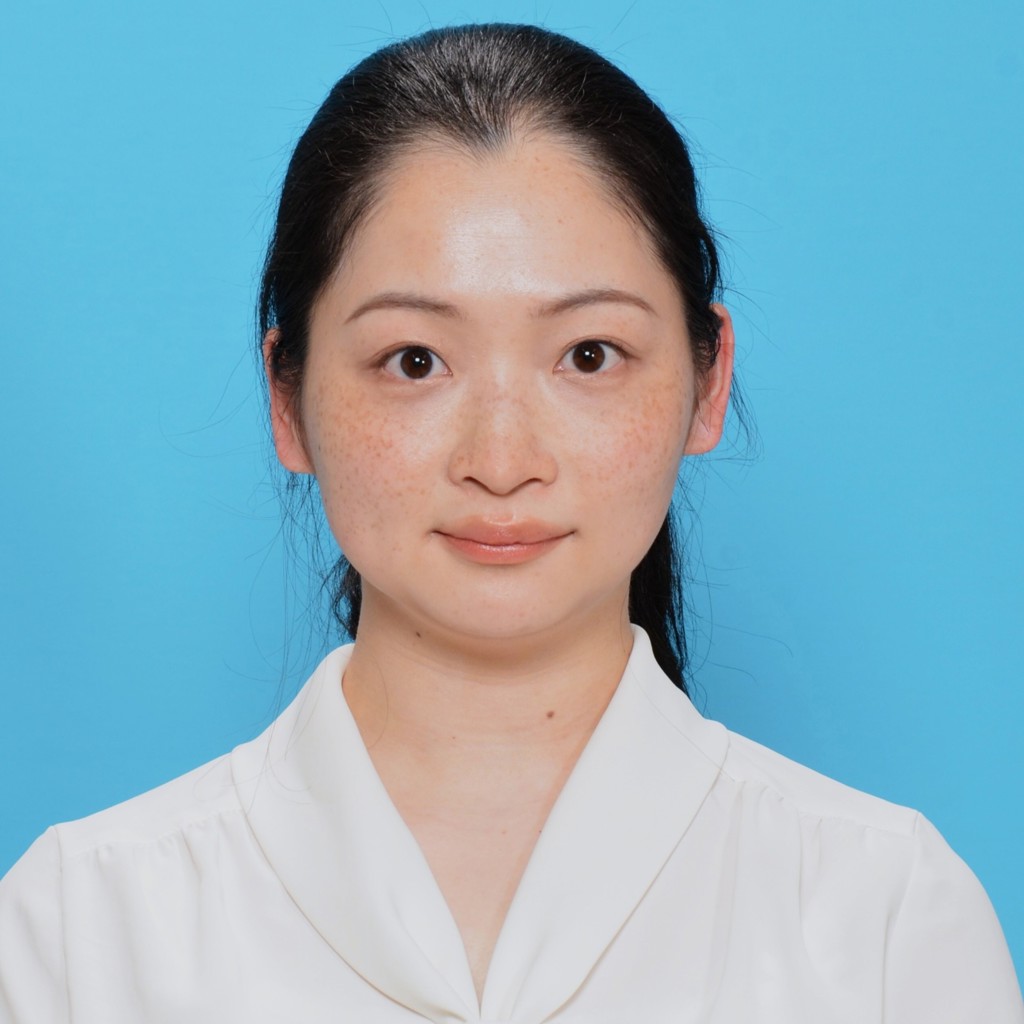
About the Speaker
Reina Yoshizaki is a Research Associate in the Department of Mechanical Engineering and at the Research into Artifacts, Center for Engineering (RACE), The University of Tokyo. She received her PhD in Engineering in 2021 under the supervision of Professor Naohiko Sugita, with a dissertation entitled “Three-Dimensional Microfabrication of Glass Using Local Selective Heating by Laser.” Her research focuses on controlling nonlinear laser–matter interactions in transparent materials, including glass, quartz, and diamond, to advance precision manufacturing. She received the Best Postdoctoral Oral Presentation Award at the Laser Applications in Microelectronic and Optoelectronic Manufacturing (LAMOM) conference at SPIE Photonics West in 2026. She has also received the Best Paper Award from the Mazak Foundation in 2023, the Best Paper Award from the Japan Society of Mechanical Engineers in 2022, and the Dean’s Award for Best PhD Thesis.
