Franz Kärtner
Events
Franz Kärtner
DESY – Center for Free-Electron Laser Science (CFEL) & Hamburg Center for Ultrafast Imaging (CUI), University of Hamburg, Germany
Solid-State Lasers for Fusion & Femtosecond Lasers on a Chip
Solid-State Lasers for Fusion
In late 2022, the National Ignition Facility (NIF) in the U.S. achieved pressures and temperatures at which hydrogen-based fuel was ignited and burned for the first time, with a fusion gain G > 1 using Laser Indirect Drive technology. This success has given Inertial Fusion Energy research a significant boost and most importantly also to solid-state laser physics. There is an intense search for laser technologies capable of delivering high-energy pulses (MJ) at high repetition rates (> 10 Hz) to support advanced IFE research and power plants. We will review the basics of lasers and laser amplifiers and an approach towards a Fusion grade laser technology based on cryogenic Yb:YLF laser amplifiers.
Femtosecond Lasers on a Chip
Femtosecond lasers are a mature technology today, with major applications ranging from materials processing to multi-photon microscopy and surgery. If femtosecond lasers would be as robust and cheap as microelectronic devices today, these fields would advance and new fields would open up. Here, we review the principles of mode locking to produce ultrashort pulses from lasers, and we explore how to implement a femtosecond laser in silicon photonics technology with parameters similar to those of table-top fiber laser oscillators.
About the Speaker
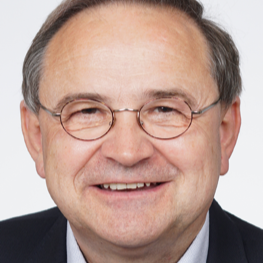
Franz Kärtner leads the Ultrafast Optics and X-rays Group at the Center for Free-Electron Laser Science at DESY and is Professor of Physics at Universität Hamburg. He received his Diploma and PhD degrees in Electrical Engineering from Technische Universität München and his Venia Legendi in Experimental Physics from ETH-Zurich. He taught and carried out research at ETH-Zurich, Karlsruhe Institute of Technology and Massachusetts Institute of Technology before coming to Hamburg.
His research interests include classical and quantum noise, few-cycle and ultralow jitter femtosecond lasers and sub-cycle optical waveform synthesizers, precision timing distribution and integrated optics, compact electron and x-ray sources, terahertz generation and acceleration and attosecond science. He founded the company Cycle GmbH, active in femtosecond precision timing. He is a Fellow of OPTICA and IEEE and was honored with the 2022 IEEE Laser Instrumentation Award and the UNIPRENEURS Award in 2023.
