Daniele Brida
Events
Daniele Brida
University of Luxembourg, Luxembourg
Ultrafast Fiber Lasers for Waveform Synthesis
Ultrafast fiber lasers can be designed for the generation of ultrashort pulses with controlled waveforms where the optical field is directly harnessed as a source of electric bias in light-matter coupling experiments. We will look into how to design a fiber laser for this purpose in all its ingredients, i.e. tailored supercontinuum generation, pulse synthesis, and carrier envelop control. Furthermore, we will explore some applications where the electric field of light is the driver of coherent electron manipulation at the atomic spatial scale and at the attosecond temporal resolution.
About the Speaker
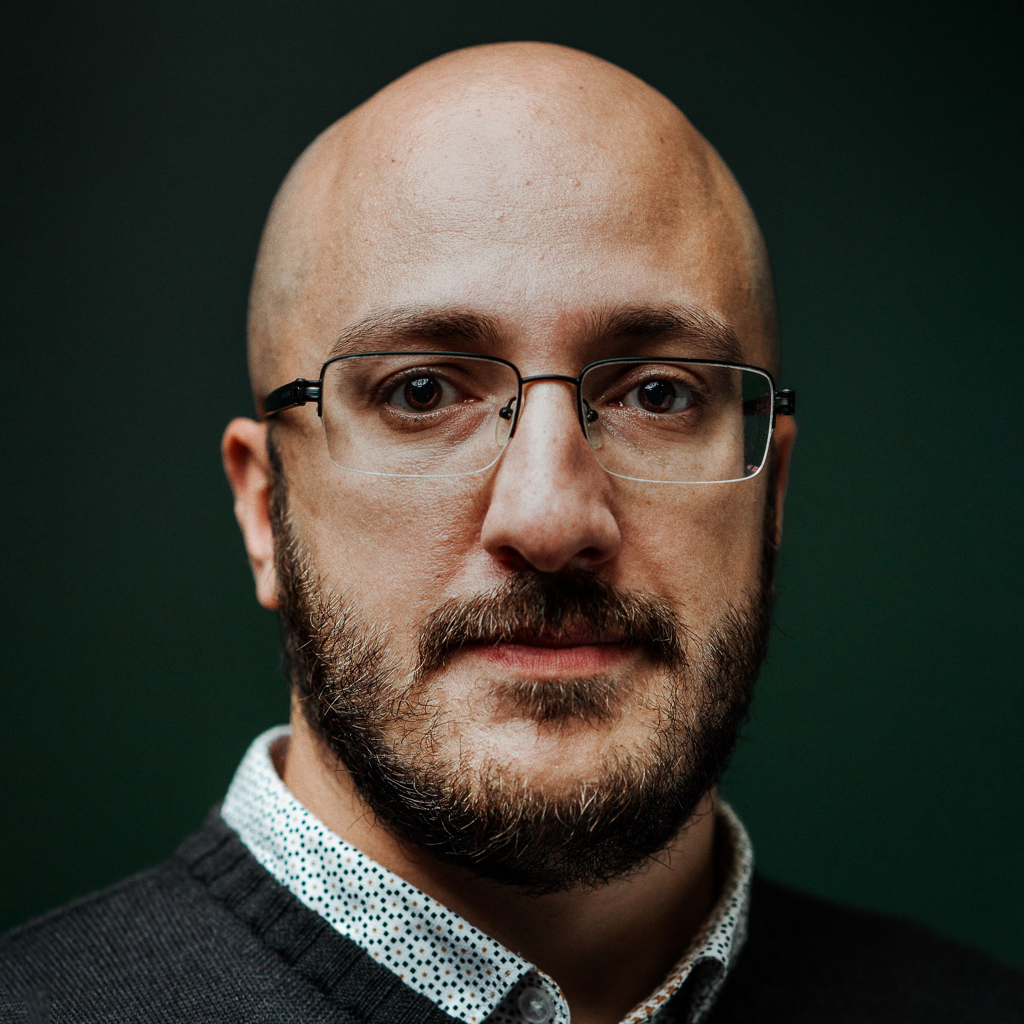
Daniele Brida’s work centers on ultrafast science, and specifically, he develops lasers and tools that can generate very, very short flashes of light, “So short that we can use them to make movies of how electrons and particles move inside of materials, which enables us to better understand the material’s properties or to use them more effectively for technological applications.” Looking to the future, he hopes to exploit light for driving electronic spectroscopies towards the femtosecond and attosecond timescales. He is particularly interested in pushing forward not only the research but also the technology. Daniele understands that new technology is instrumental in pushing the field forward, and he consciously works toward the development of new techniques and devices.
Daniele found his academic focus while completing his master’s degree at the Politecnico di Milano in Italy. He was always interested in science, routinely reading the complete science textbook in the summertime before the school year began. During his master’s thesis project, he became more and more interested in the topics he was working on, and he loved the people surrounding and supporting him at that time. Later, his PhD advisor, Giulio Cerullo, was particularly influential, guiding his scientific growth at a pivotal time. After graduating, Daniele searched for a professional career with both freedom and support, similar to what he found in his studies. Luckily, he found that early on and is now a Full Professor in Experimental Physics at the University of Luxembourg.
In his current position, Daniele leads the only optics-focused group in Luxembourg within the only university in the country. He enjoys the independence to really focus on following his interests and to delve very deeply into those topics without many distractions. He doesn’t like to force collaborations with groups outside his own but finds the ones that develop naturally extremely rewarding. One such budding collaboration is with the Institute of Photonics, located in neighboring France but heavily involving Daniele’s group in Luxembourg. He is interested to see the project continue to develop and what opportunities may arise.
Research is Daniele’s passion, though he still enjoys working with his students. He shares, “I enjoy the things I’m talking about, and I want to share them with others interested in learning. When there is an ongoing discussion, and you can use it to give additional background, it’s very fulfilling because you expand that person’s horizon.” Daniele acknowledges the difficulty of physics but encourages young people to push past that difficulty and establish a working knowledge of the topics early in their education. He shares an amusing analogy, “No one would be proud if they couldn’t read, so why do young people brag that they aren’t able to do math?” He encourages everyone to develop a working scientific knowledge and pushes those passionate about it to pursue a career.
Daniele’s favorite scientist is Joseph Fourier, the French mathematician and physicist who laid the groundwork for many principles and theories commonly used today. For example, the Fourier transform is at the foundation of Heisenberg’s indeterminacy principle. Daniele enjoys teaching about Fourier, and sharing how the foundational work he did has shaped the field today. He reiterates that foundational knowledge is extremely helpful in a fulfilling career in research, and it is important to understand concepts from their historical beginnings.
