Seigo Tarucha
Events
Seigo Tarucha
Riken
Improved Performance of Spin-Based Quantum Computing Devices in Silicon
Semiconductor-based QC has rapidly attracted increasing interest. Despite emerging several years later than other hardware platforms, it offers compelling advantages, including the small footprint of qubit devices and fabrication processes compatible with standard CMOS technology. This trend is particularly prominent for silicon spin qubits in quantum dots.
Key challenges toward practical spin-qubit processors include fault-tolerant qubit operation, quantum error correction and scalable qubit architectures. Notably, recent progress in qubit control has enabled single- and two-qubit gate fidelities that exceed commonly discussed fault-tolerance thresholds. Nevertheless, scaling up qubit devices remains one of the central challenges across all quantum computing platforms. For silicon-based approaches, advanced industrial fabrication technologies provide a promising route to accelerate the development of large-scale architectures.
In this talk, I will first review recent advances in improving performance in qubit control fidelities and discuss the dominant error mechanisms that currently limit qubit performance. I will then highlight recent efforts toward scalable device geometries and integration strategies for silicon spin-qubit processors.
About the Speaker
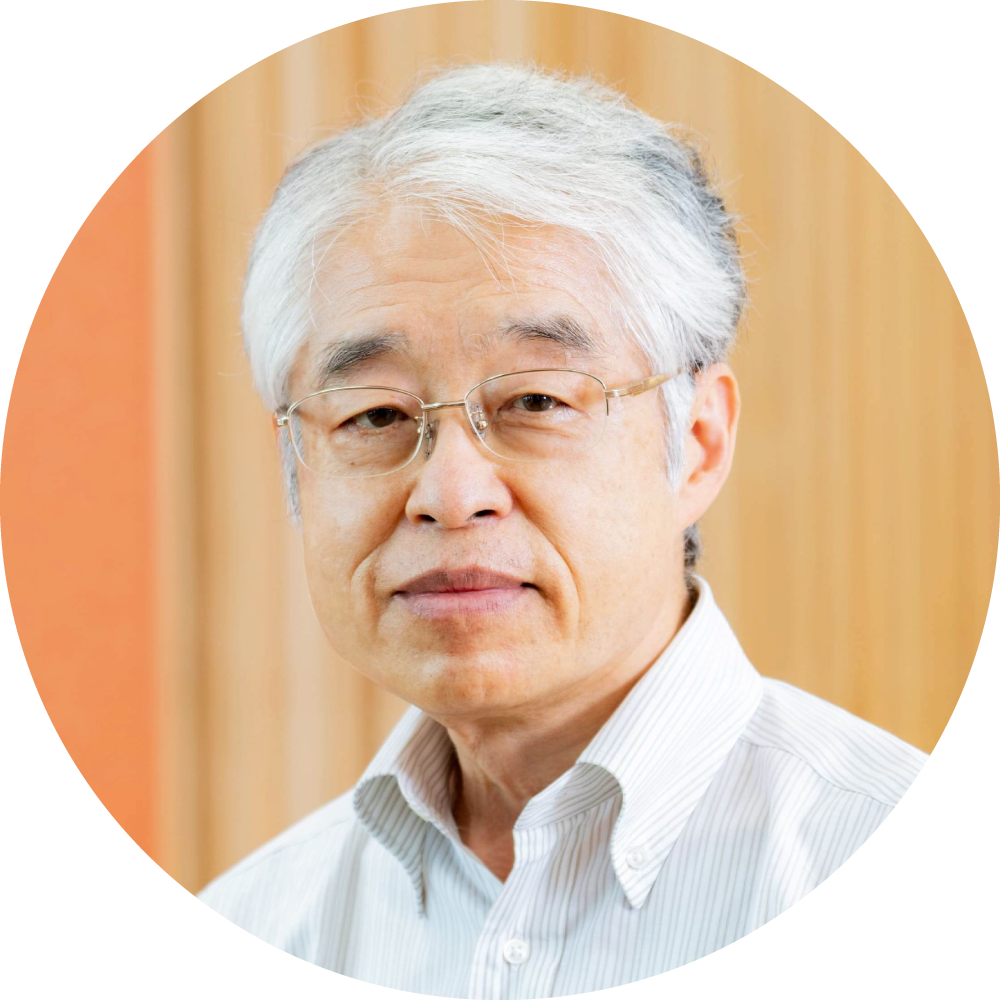
Seigo Tarucha received the B.E. and M.S. degrees in applied physics from the University of Tokyo in 1976 and 1978, respectively. He joined the NTT Basic Research program in applied physics at the University of Tokyo in 1986. In 1998, he moved to the University of Tokyo as a professor in the Department of Physics and then to the Department of Applied Physics in 2005. In March of 2019, he retired from the University of Tokyo, and since then, he has been fully affiliated with the RIKEN Center for Emergent Matter Science (CEMS). He has been running a Quantum Functional System Research Group in CEMS since 2013 and also a Semiconductor Quantum Information Device Research Team in RIKEN Center for Quantum Computing (RQC) since 2019. He was a guest scientist at the Max-Planck-Institute (Stuttgart) in 1986 and 1987 and at TU Delft in 1995. He is currently working on the physics and technology of spin-based quantum computing and topological quantum computing. He received the Japan IBM award in 1998, the Kubo Ryogo award, the Quantum Devices award in 1998, the Nishina award in 2002, the National medal with purple ribbon in 2004, the Leo Esaki Award in 2007, the Achievement award of Japan Applied Physics Society in 2018 and the Fujiwara Award in 2023. He is a fellow of the Japan Applied Physics Society and the IOP.
