Ultra-thin optical film sharpens 3D printing precision
About Optica
23 April 2026
Ultra-thin optical film sharpens 3D printing precision
Light-shaping film improves collimation and uniformity, laying the groundwork for low-cost LCD resin printers that produce professional-grade parts
WASHINGTON — Researchers have developed an ultra-thin optical film that improves the quality of the light used in LCD resin-based 3D printers. The advance helps ensure that tiny details are reproduced with precision, which could make it possible to 3D-print medical-grade or industrial-grade products at a lower cost.
Resin-based 3D printing, or vat photopolymerization, uses short-wavelength light to project patterns onto liquid photosensitive resin. Although this additive manufacturing approach enables highly detailed, smooth parts, some low-cost systems rely on LCD backlights that can reduce printing accuracy.
Caption: Magnetic field-enhanced alignment and detection of hemozoin in lysed infected red blood cells using polarizing microscopy
Credit: Dickson Mwenda Kinyua, Kirinyaga University
“LCD-based liquid 3D printing suffers from surface roughness or dimensional inaccuracies due to improper light angular distribution from the backlight systems used,” said research team leader Ding-Zheng Lin from National Taiwan University of Science and Technology. “Our goal was to fix these problems without increasing equipment size, thereby elevating print performance to professional grade.”
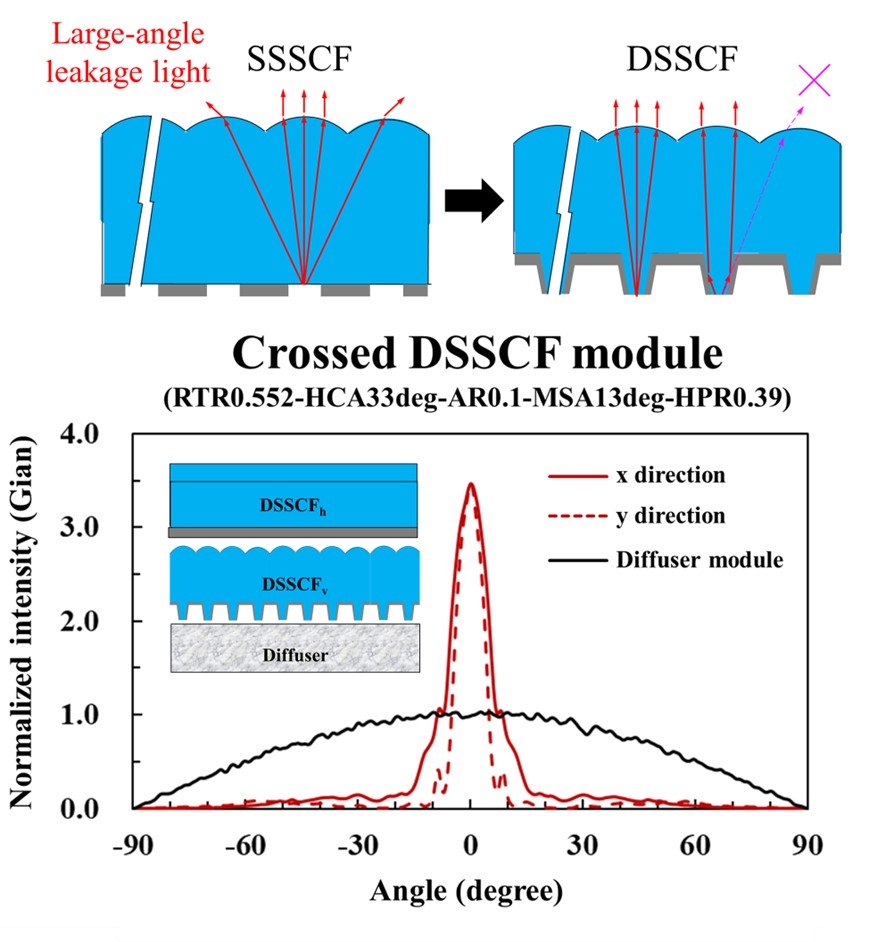
In the journal Optical Materials Express, the researchers describe their double-sided structure collimation film, which they used to make a prototype LCD backlight system for 3D printing. The film makes the light emitted by the backlight system highly collimated, meaning the light rays travel in nearly parallel lines with minimal spread, while also improving light uniformity, ensuring that the light intensity is evenly distributed across the printing area.
“This technology could make it possible to use inexpensive 3D printing systems to create dental models, jewelry designs and engineering prototypes with precise dimensions and glossy finish,” said Lin, who added that the technology could also improve the precision of consumer-grade printers. “It might eventually allow consumers to use a 3D printer at home to create custom earbud shells that fit perfectly in their ear or precision mechanical watch parts.”
Precision light filtering
In vat photopolymerization, the resin is cured with UV light layer by layer as it absorbs enough energy. To keep system costs down, some of these 3D printing systems use an LCD backlight system — a flat optical illumination module that allows UV light from an LED lens array to cure the entire layer at once — but these face challenges related to light intensity and spectral uniformity.
In the new work, the researchers designed a film that acts like a precision light filter for an LCD backlight system. They accomplished this by using optical film simulation software to calculate the optimal geometric parameters for microscopic arrays of special lenticular lenses and trapezoidal microstructures, which manipulate light on both sides of the film. This allowed optical correction within an extremely thin space.
When light from the backlight passes through the film, scattered light is refracted and realigned, ultimately projecting uniformly onto the printing area. Light that falls outside of the escape angle is reflected back into the highly reflective module for recycling.
“Compared to existing technologies, such as bulky lens assemblies or older single-sided structure films, our double-sided films are thinner while also being more precise and cost-effective,” said Lin. “This allows minute details to be reproduced accurately while saving space inside 3D printers, and it is well-suited for mass production and integration into consumer-grade devices.”
Improved collimation and light uniformity
To analyze the double-sided film, the researchers built a measurement system based on a specialized light-measuring tool called an angle-dependent photometer. This allowed them to measure the beam divergence angle and the intensity distribution of light passing through the film. The data showed a significant improvement for proper beam collimation and a very uniform light distribution, demonstrating that the film design is highly effective.
The researchers also created a prototype backlight module by integrating two double-sided films with a diffuser. They showed that this module exhibited an intensity uniformity greater than 81% and that the light was relatively directional rather than widely scattered (first peak FWHM below 10°).
The researchers are now working to further improve light utilization efficiency by reducing energy loss and testing performance under different wavelengths of light to ensure compatibility with a wide range of 3D printing resins.
Paper: Z.-J. Zhang, D.-Z. Lin. “Double-sided structure collimation film (DSSCF) for direct-lit backlight in high contrast liquid crystal display and 3D printing,” Opt. Mater. Express 16, 1427-1439 (2026).
DOI: 10.1364/OME.593296.
About Optica Publishing Group
Optica Publishing Group is a division of the society, Optica, Advancing Optics and Photonics Worldwide. It publishes the largest collection of peer-reviewed and most-cited content in optics and photonics, including 19 prestigious journals, the society’s flagship member magazine, and papers and videos from over 1200 conferences. With over 520,000 journal articles, conference papers and videos to search, discover and access, its publications portfolio represents the full range of research in the field from around the globe.
About Optical Materials Express
Optical Materials Express is an open-access journal focusing on the synthesis, processing and characterization of materials for applications in optics and photonics. It is published by Optica Publishing Group and emphasizes advances in novel optical materials, their properties, modeling, synthesis and fabrication techniques; how such materials contribute to novel optical behavior; and how they enable new or improved optical devices. The Editor-in-Chief is Andrea Alù from City University of New York, USA. For more information, visit Optical Materials Express.
Media Contact
