Nicholas Harris
Lightmatter, USAFor transformative advances in programmable photonic integrated circuits and pioneering photonic AI acceleration technologies at the intersection of optics and machine learning
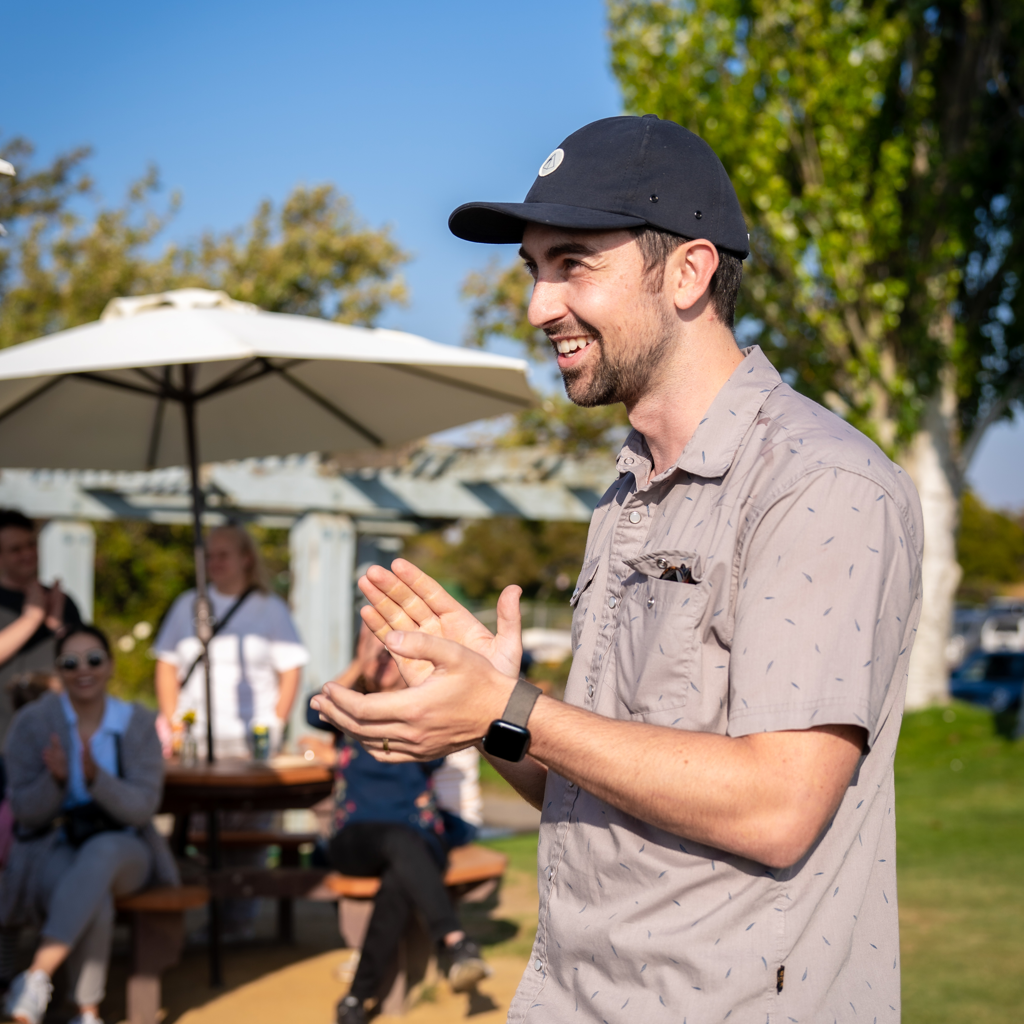
Nicholas (Nick) Harris is on a mission to understand computers at the atomic and photonic levels. Ever since he was a child on his Macintosh Classic, he’s been interested in learning everything there is to know about how computers work. He decided to study electrical engineering as an undergraduate and focused on analog circuit design, as close as he could get to transistors and the physical processes that made computers work. Upon graduation, he joined Micron as an R&D engineer working on DRAM. Here, he helped develop and characterize the next generation of transistor process nodes, building a solid understanding of how the components worked together. However, he realized that there were some gaps in his knowledge, particularly in physics.
He also learned that transistors, which had been scaling pretty consistently since their invention in the 1960’s, had stopped scaling around 2005. This meant that computers and devices had reached the limit of how small and cheap they could be using traditional transistors. Not to mention that around the same time, AI began to come into use, requiring massive amounts of processing power. To help contribute to the solution, Nick decided to pursue graduate studies at MIT.
There, he was interested in figuring out how to augment transistors with other technologies, and for Nick, that meant light. Using electrodynamics, solid state physics, and quantum information theory, he developed photonic chips and systems called programmable nanophotonic processors. He shares, “I had basically built a new type of computer for quantum and classical computing, and it was generating a lot of publications. At the same time, machine learning at MIT was starting to take off, and I realized the mathematics behind what I was doing was the same as what was behind machine learning.” Ultimately, this led to the founding of his company, Lightmatter.
Nick, along with co-founders Darius Bunadar and Thomas Graham, had a unique blend of scientific expertise and business acumen and capitalized on those strengths to grow the company into what it is today. Lightmatter’s goal is to drive the future of computing. Currently, that means networking lots of computer chips together with incredible bandwidth and very low latency, very low delay in communication, and building the lasers that make that possible. In the future, it's going to be about reinventing the compute engine itself. Last year, Lightmatter published a paper in Nature on what that compute engine might look like, and that chip is now in the Computer History Museum in Mountain View, California, USA. Despite his commitments on the business side, Nick is still intimately involved in the company's engineering, allowing him to continue his pursuit of understanding computers and defining what they will become.
As the CEO of a large company, Nick has many responsibilities. He truly considers how the business's success impacts not only his employees but also their families. He reflects that, as an experimentalist, he was strongly drawn to becoming an academic. At MIT, his academic advisor, Isaac Chuang, gave Nick an important piece of advice that changed Nick’s career trajectory. “His advice to me was, ‘You should do something that'll affect at least, like, 500 million people.’ Which is a very specific number, but it's a really big fraction of the planet’s population. And I thought about that a lot. It was one of the reasons that I decided to start the company rather than going straight into academia.”
Nick reflects that he’s found success in entrepreneurship by fostering strong relationships and communicating ideas very well. “Entrepreneurship is really about people and relationships, which is a big lesson. I'm a scientist, and I think about what's true in mathematics and physics, but building great technology is only part of the story in business. It's really about these relationships with people, and without those, you can't really build a company.” Nick discovered that the communication skills required to explain complex science naturally translate into storytelling, fundraising, and leading teams, and he emphasizes that they are necessary for a CEO.
For young scientists considering their own careers, Nick offers advice that reflects the philosophy guiding his own. "If you want to be the best," he says, "don't do something because it's a trend. Do it because you fundamentally love it." For Nick, that love has always been understanding computers at their deepest level. Today, that lifelong curiosity isn't just answering old questions; it is defining the future of computing itself.
Photo Courtesy of Nicholas Harris
Profile Written by Samantha Hornback
