Judith Su
University of Arizona, College of Optical Sciences, USAFor pioneering work on label-free optical biosensing for fundamental science, translational medicine, and environmental monitoring
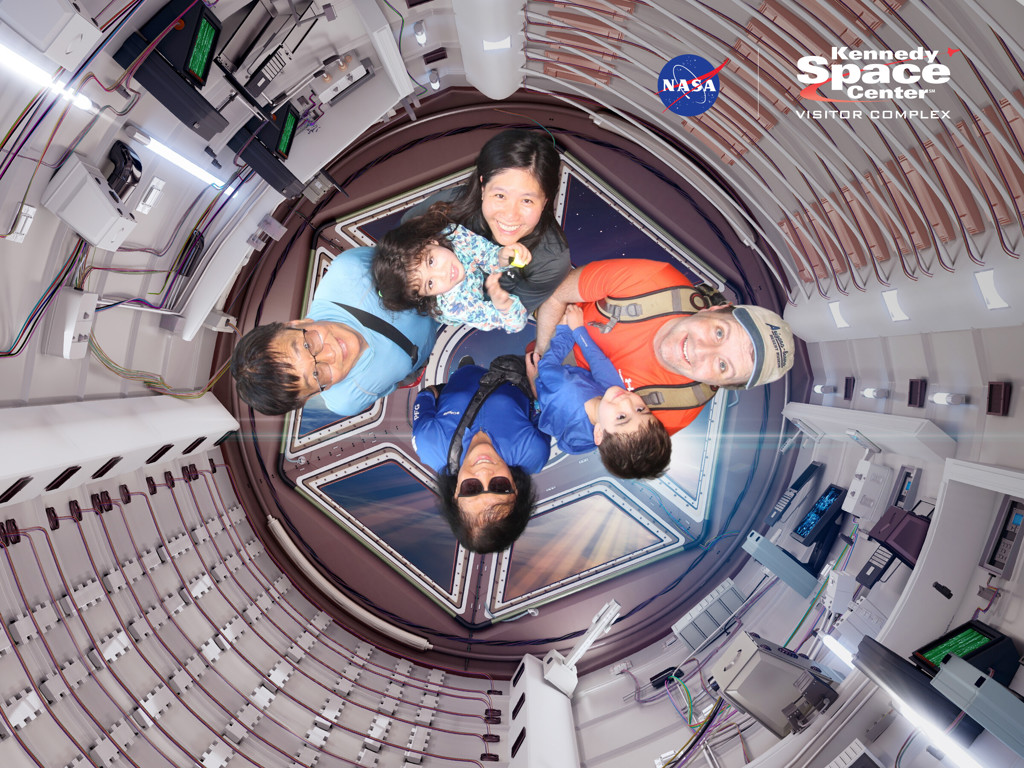
Judith Su doesn't let disciplinary boundaries define the questions she pursues. Her curiosity has always been broad. In high school, some of her favorite classes were AP Art History, AP English Literature, and Geometry, and she recalls enjoying nearly every class she later took at MIT and Caltech. She has long admired scientists and thinkers who shared that breadth, particularly Leonardo da Vinci, Archimedes, and Carl Friedrich Gauss. She shares, “They remind me that important discoveries often come from looking at a problem from more than one perspective.”
Judith began doing research unusually early. She remembers being fascinated as a child by building a solar cooker with her father, and by age 15 she was presenting research at professional meetings. Her work on cloud dynamics was presented at the 1997 ASME Fluids Engineering Division Summer Meeting, and that early research experience helped her obtain a research assistant position during her freshman year at MIT.
Since then, she has continued to follow interesting questions across progressively smaller scales-from cloud dynamics and fluid mechanics to plant fluid mechanics, cellular mechanics, and ultimately molecular sensing. The common thread has been using physical principles and quantitative measurements to understand complex systems.
Today, Judith's group develops next-generation optical sensing platforms for label-free, ultrasensitive molecular detection, including single-molecule measurements and concentrations reaching the zeptomolar regime. FLOWER, the frequency-locked optical whispering evanescent resonator platform, is central to this work. Her group is extending these capabilities through FLORAL for plant sensing, PETALS for quantum-enabled sensing, and frequency-comb and computational approaches.
What excites Judith most is the convergence of photonics, biology, quantum technologies, and computation. The goal is not simply greater sensitivity, but creating measurements that were previously impossible and, through collaboration with experts in other fields, applying those capabilities to important scientific and societal problems. Applications include earlier disease detection, drug discovery, environmental monitoring, plant health, and agricultural resilience. An emerging collaboration with Sara Seager is also exploring whether technologies such as FLOWER could one day contribute to life-detection measurements for planetary missions, including Venus.
Judith sees optics and photonics as entering a period of extraordinary opportunity. Rapid advances in photonics, AI, computation, quantum technologies, materials, and biology are opening new directions quickly. Her biggest challenge is having more interesting opportunities than time to pursue them all. Her favorite part of research is meeting with lab members and collaborators to discuss progress, troubleshoot problems, and decide what to do next-often the point where unexpected results lead to the most interesting ideas.
Mentors have also played an important role throughout Judith's career. Some have helped her recognize opportunities and navigate decisions; others have advocated for her, connected her with new communities, or nominated her for opportunities. She tries to keep mentors informed about what she is doing and encourages younger scientists to build a network of mentors rather than expecting one person to provide everything.
Her advice to students considering STEM careers is simple: “Don't overthink it.” There is plenty of interesting and important work to do. Take the opportunities available, get involved, connect with people whose work interests you, and learn by doing. “The next opportunity often becomes visible only after you've started moving.” She applies a similarly practical philosophy to her own career: keep track of what needs to be done and when it is due, and do not spend too much energy worrying about things outside your control.
Judith also believes great scientists combine ambition with humility. “Great scientists focus on important problems and never lose sight of how little they know.” For her, that means being willing to tackle important questions while remaining open to evidence, collaborators, and ideas from outside one's own expertise.
Optica has been Judith's professional home. It is where she regularly reconnects with peers, exchanges ideas, and stays connected to the broader optics and photonics community. She also values Optica's forward-looking and family-friendly culture. When her children were very young, Optica helped clarify conference policies that enabled her to bring a toddler to meetings, making it easier to remain professionally active while raising a young family.
Travel has become an important family activity as well. Judith and her husband often take their young children with them to conferences, and her parents sometimes join them to help. Her parents also organize annual family trips so that Judith, her siblings, and their families can spend time together. “I value Optica not only for the science,” Judith says, “but also for the community it creates.”
FLOWER: frequency-locked optical whispering evanescent resonator platform; FLORAL: Frequency-Locked Optical Resonator for Acoustic Listening; PETALS: Photon Entanglement for Toroidal Advanced Label-free Sensing.
Photo Courtesy Judith Su
