Plenary Speakers
Plenary Speakers
Maria Chekhova
Max-Planck-Inst Physik des Lichts, GERMANY
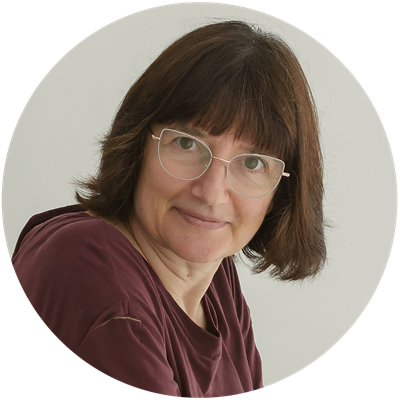
Ultrathin Sources of Spontaneous Parametric Down-conversion
Thin films and resonant nanostructures, due to the automatic satisfaction of phase matching and geometric resonances enhancing vacuum field, offer a multifunctional platform for generating quantum light through spontaneous parametric down-conversion.
About the Speaker
Maria Chekhova obtained her PhD at the Lomonosov University (Moscow, Russia) in 1989, then the habilitation degree in 2004, and worked there until 2009 as a researcher and a group leader. Since 2009, she has led an independent research group at the Max-Planck Institute for the Science of Light (Erlangen, Germany). Her research area is the generation and application of nonclassical light, with a special focus on extreme cases: bright quantum light on the one hand and nanoscale sources of quantum light on the other. She is a fellow of Optica and a recipient of several awards, including the ERC advanced grant.
Irina Larina
Baylor College of Medicine, UNITED STATES
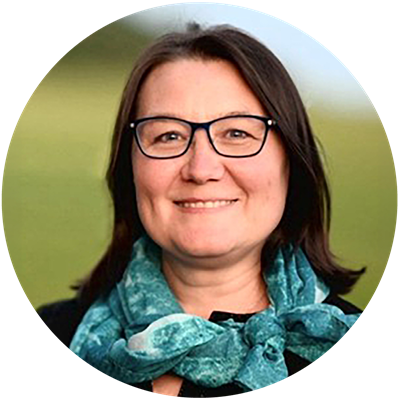
Biophotonics for Decoding the Mysteries of Female Reproductive Physiology
Using intravital optical coherence tomography (OCT), this talk uncovers previously unseen dynamics of ovulation, gamete movement, and ciliary coordination in the mouse reproductive system, demonstrating how biophotonic innovation drives both fundamental discoveries and emerging clinical applications.
About the Speaker
Dr. Irina V. Larina is a Professor and the Kyle and Josephine Morrow Endowed Chair in the Department of Integrative Physiology at Baylor College of Medicine in Houston, Texas. Originally trained in physics at Saratov State University in Russia, she transitioned into biomedical research during her Ph.D. studies at the University of Texas Medical Branch in Galveston, USA. Her research work bridges physics and biology, focusing on the development of advanced optical imaging technologies to study mammalian embryonic development, cardiovascular dynamics, and reproductive biology. Dr. Larina is a Fellow of the Optica Society and a Senior Member of the SPIE Society.
Mehul Malik
Heriot-Watt Univ., UNITED KINGDOM
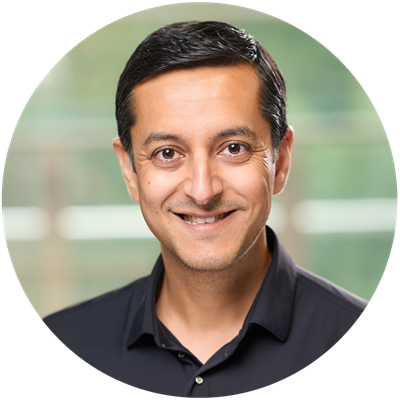
High-Dimensional Quantum Technologies
The multi-modal properties of quantum light promise a pathway towards scalable and noise-robust quantum technologies. In this talk, I will introduce the field of high-dimensional quantum photonics and discuss how we control and manipulate highly complex quantum states of light encoded in the space and time
About the Speaker
Mehul Malik FRSE FOptica is Professor of Physics and Royal Academy of Engineering Chair in Emerging Technologies at Heriot-Watt University, Edinburgh, where he leads the Beyond Binary Quantum Information Lab (https://bbqlab.org/). His research focuses on the study of structured quantum light in space and time and its application in next-generation quantum technologies for communication, computing, and sensing. Mehul currently holds an ERC Consolidator grant and serves as Associate Editor for the journal Optica. His research contributions have been recognised by the 2021 Royal Society of Edinburgh Early Career Medal and being named a 2024 UK Blavatnik Awards Honoree.
Clara Osorio Tamayo
TNO-Optics and QDNL, NETHERLANDS

Quantum Sensing from Fundamentals to Industrial Applications
Quantum sensors using single quantum systems to measure physical quantities have shown exceptional performances. In this talk, I will introduce NV‑center magnetometers as an example and highlight how our team develops these sensors into robust, scalable solutions for industrial applications.
About the Speaker
Clara I. Osorio Tamayo is a Senior Scientist at TNO, the Netherlands Organization for Scientific Applied Research. She is currently leading TNO’s Quantum Sensing activities and leading QDNL/CAT3 The Dutch National Program on Quantum Sensing. For the last 20 years, her focus has been on quantum technologies, mainly quantum sensing and communications and has contributed to R&D projects for the Semiconductor, Medical and Defence industries. She is a Physicist of the University of Antioquia (Colombia) and holds a Ph.D. in Experimental Quantum Physics from ICFO (Spain) and worked at the University of Geneva (Switzerland) and AMOLF (The Netherlands) before joining TNO.
Carmelo Rosales Guzmán
Centro de Investigaciones en Óptica (CIO), MEXICO

When Light Takes Structure: A New Twist in Modern Optics
Structured light is reshaping the frontiers of modern optics, opening pathways to explore novel physical phenomena and enabling innovative applications. In this talk, I will introduce the fundamental principles behind structured light, present the state-of-the-art methods for its generation and control and highlight representative applications that demonstrate its transformative impact across science, technology and engineering.
About the Speaker
Dr. Rosales-Guzmán obtained his PhD in 2015 from ICFO – The Institute of Photonic Sciences. He subsequently joined the Structured Light Laboratory, led by Prof. Andrew Forbes, at the University of the Witwatersrand (South Africa) as a research fellow. From 2018 to 2022, he held a faculty position at the Harbin University of Science and Technology (China), and since 2020 he has been a principal investigator at CIO-Centro de Investigaciones en Óptica (Mexico). He has published over 100 research articles and three books. His outstanding contributions to the field of structured light earned him the 2023 SPIE Early Career Achievement Award.
Luis José Salazar Serrano
Craft Prospect, UNITED KINGDOM
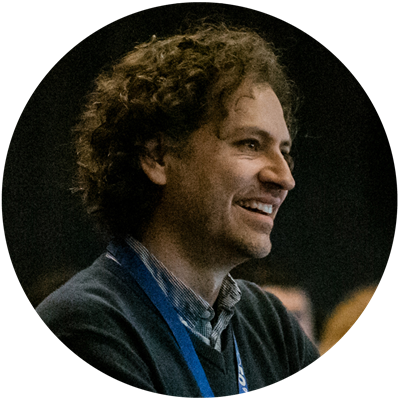
Laser Communications in Space: From Fundamentals to Implementation, Unlocking Future Opportunities
This talk introduces the core principles of free-space optical communications, covering link and pointing constraints, space-to-space and space-to-ground links, and applications in classical and quantum communications for future high-capacity, secure connectivity.
About the Speaker
Luis José Salazar‑Serrano is a physicist and electronics engineer with extensive experience in both academia and industry. He has developed satellite payloads for Earth observation, star tracker systems, and free-space optical communications, among others. Over the last few years, he has successfully demonstrated operational inter-satellite optical links in Low Earth Orbit (LEO). Currently, he serves as Chief Engineer at Craft Prospect Ltd., Glasgow, Scotland, leading the development of the VOLT (Versatile Optical Laboratory for Telecommunications) payload for space-to-ground classical and quantum communications.
Clara Saraceno
Ruhr Universitat Bochum, GERMANY
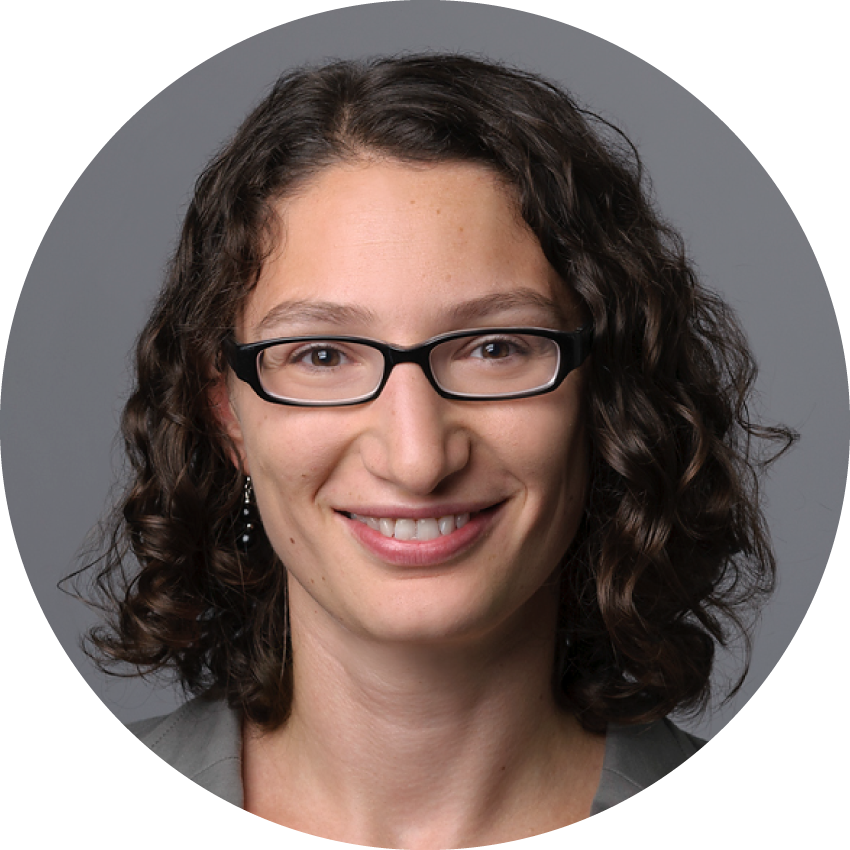
High-Power Ultrafast Moves into the Terahertz
Ultrafast laser-driven broadband terahertz sources serve diverse scientific and industrial fields, yet low average power has limited widespread adoption. High-power Ytterbium lasers now enable high-power watt-level broadband THz generation. We review recent advances, scaling challenges and emerging application areas.
About the Speaker
Clara Saraceno is a full professor at Ruhr University Bochum, Germany. Born in Argentina, she earned an Engineering Diploma and MSc at Institut d'Optique Graduate School, Paris (2007), then trained at Coherent Inc., California. Her PhD in Physics at ETH Zürich (2012) focused on high-power ultrafast disk lasers, followed by postdoctoral work on XUV high-harmonic generation at Neuchâtel and ETH Zürich. In 2016, she became an associate professor at Bochum, and in 2020, a full professor. Her research spans high-power ultrafast lasers and THz technology. Awards include the ETH Medal (2013), EPS QEOD PhD Prize (2013), Sofja Kovalevskaja Award (2016), ERC Starting (2018) and Consolidator (2024) Grants, SPIE Edgerton Award (2024) and Optica Fellowship (2022).
Oleg Shpyrko
University of California San Diego, UNITED STATES
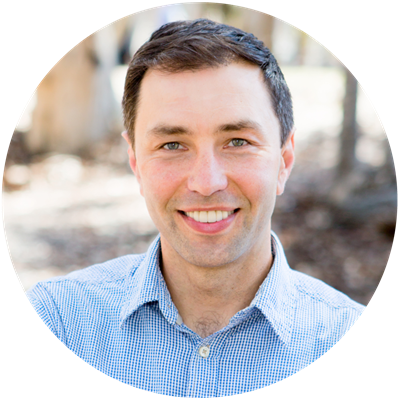
X-Ray Nanovision of Energy Storage Materials
Operando 3D X-ray Bragg Coherent Diffractive Imaging reveals how nanoscale structural defects nucleate and evolve in energy storage materials during electrochemical cycling, linking dislocation dynamics to performance degradation and demonstrating that understanding defect mechanisms enables recovery of original functionality.
About the Speaker
Oleg Shpyrko is a Professor and Chair of the Department of Physics at the University of California, San Diego, and Associate Director of the Q-MEEN-C Energy Frontier Research Center. He received his Ph.D. in Physics from Harvard University in 2004. His research focuses on synchrotron-based coherent X-ray scattering and imaging of quantum and energy materials. He is a recipient of the NSF CAREER Award, the APS Rosalind Franklin Young Investigator Award and the UCSD Senate Distinguished Teaching Award.
Victor Torres Company
Chalmers Univ. of Technology, SWEDEN
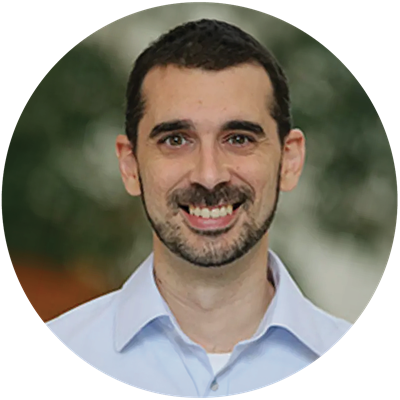
Rulers of Light on a Chip – Photonic System Engineering with Microcombs
Frequency combs are among the most influential developments in optics, enabling ultralow-noise microwave generation, optical atomic clocks and precision calibration of astronomical spectrographs. Recent advances in integrated nonlinear photonics have brought this concept onto the chip. In this plenary talk, I will trace the evolution of microcombs from nonlinear physics to integrated photonic systems, highlighting recent progress enabled by photonic integration and the challenges ahead.
About the Speaker
Victor Torres-Company heads the Ultrafast Photonics group at Chalmers University of Technology, where he focuses on advancing laser technology for the generation of fiber-optic communication systems. His research spans areas such as photonic integration, nonlinear physics and laser frequency combs, with notable publications in prestigious journals including Nature Photonics, Nature Communications, Science Advances and Physical Review Letters. In 2021, Victor co-founded the startup Iloomina AB, which aims to expedite the market adoption of chip-scale frequency combs through collaboration with PhD students. In addition to his research, Victor actively contributes to teaching within the Wireless, Photonics and Space Engineering program. His significant contributions to the field have been recognized with several prestigious awards, including an European Research Council Consolidator Grant in 2018, a VR Consolidator Grant in 2020 and a Marie Curie Fellowship. Moreover, Victor serves as the director of the VR Research Excellence Center for Integrated Metaphotonics, a collaborative initiative between the Department of Microtechnology and Nanoscience and the Physics Department at Chalmers, focused on bridging knowledge gaps in inverse design techniques and heterogeneous integration.
Laurent Vivien
C2N - Paris Saclay University, FRANCE
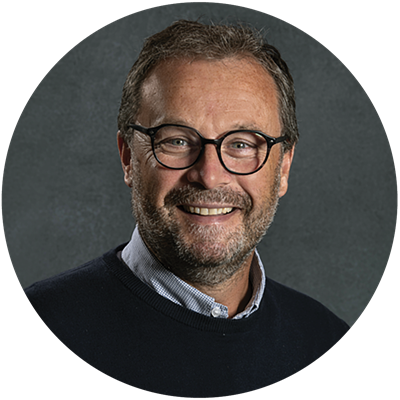
The New Challenges of Silicon Photonics
Silicon photonics is emerging as the key integrated platform tackling challenges in data centers, AI, sensing, and quantum technologies. This presentation outlines its evolution toward greater integration and enhanced functionalities, enabling broader application impact.
About the Speaker
Dr Vivien is a CNRS researcher at the Centre for Nanoscience and Nanotechnology (C2N), a joint Laboratory of CNRS and University Paris Saclay, France. His research activities focus on the development of fundamental concepts and devices in silicon photonics including optoelectronic devices and heterogeneous integration. He served as Deputy Director of C2N and Director of the Photonics Department (2016 - 2025). Dr Vivien also received two European Research Council (ERC) grants in silicon photonics and its integration. He is also one of the cofounders the start-up InSpek and is an elected Fellow of Optica, EOS and SPIE.
Lorenz Willmann
Rijksuniversiteit Groningen, NETHERLANDS
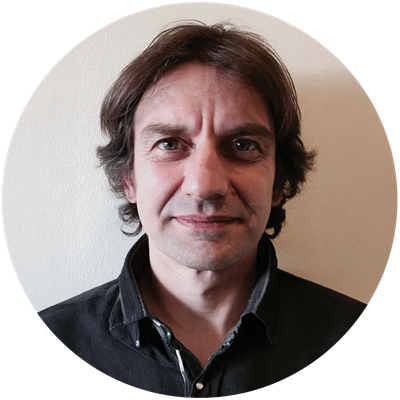
Learning about the Standard Model with Atomic, Molecular and Optical Physics
The development of AMO physics has provided major contributions to the shaping Standard Model of Particle Physics (SM). In particular, the ability to measure quantities with extreme precision has been used as a fundamental tool in such research. I will discuss a number of historical examples and their impact on model building and development of technologies. Starting from this we will explore current efforts which aim at shedding light on the difference of matter and antimatter and relative strength of the electromagnetic, weak and strong interaction. Examples will be taken from searches for permanent electric dipole moments on a fundamental particle, laser spectroscopy of matter/antimatter systems and the role of parity violation in atomic systems to explore the reach of ongoing and future projects.
About the Speaker
After studies of physics at the Universities of Hamburg and Heidelberg, Germany Lorenz Willmann started his graduate work at the University of Heidelberg at the intersection of atomic physics and high energy physics. His thesis work was on establishing a world leading limit on a process on the lepton number violating process in the leptonic sector. These experiments brought him to extended research stays to the Paul Scherrer Instittute, Villigen, CH and the Rutherford Appleton Lab, Chilton, UK. Postodictoral work lead Dr. Willmann to the Massachusetts Institute of Technology, MA, USA, where he worked on optical two-photon spectroscopy of ultracold trapped hydrogen, a system in which they achieved Bose-Einstein Condensation (BEC) in 1998. In 2001 Dr. Willmann moved to the Netherlands to accept a position to build a facility for studies of Fundamental Interaction and Symmetries with radioactive Atoms (TRIμP). They initiated experimental research radioactive atoms for the study of Lorentz symmetry violation, observation of parity violation in atomic systems and searches for permanent electric dipole moments in a number of systems. In 2014, Dr. Willmann joined the Van Swinderen Institute for Particle Physics and Gravity as a founding member. They continue research on the questions of fundamental symmetries in the Standard Model with experimental approaches and theoretical descriptions.
