Plenary Speakers
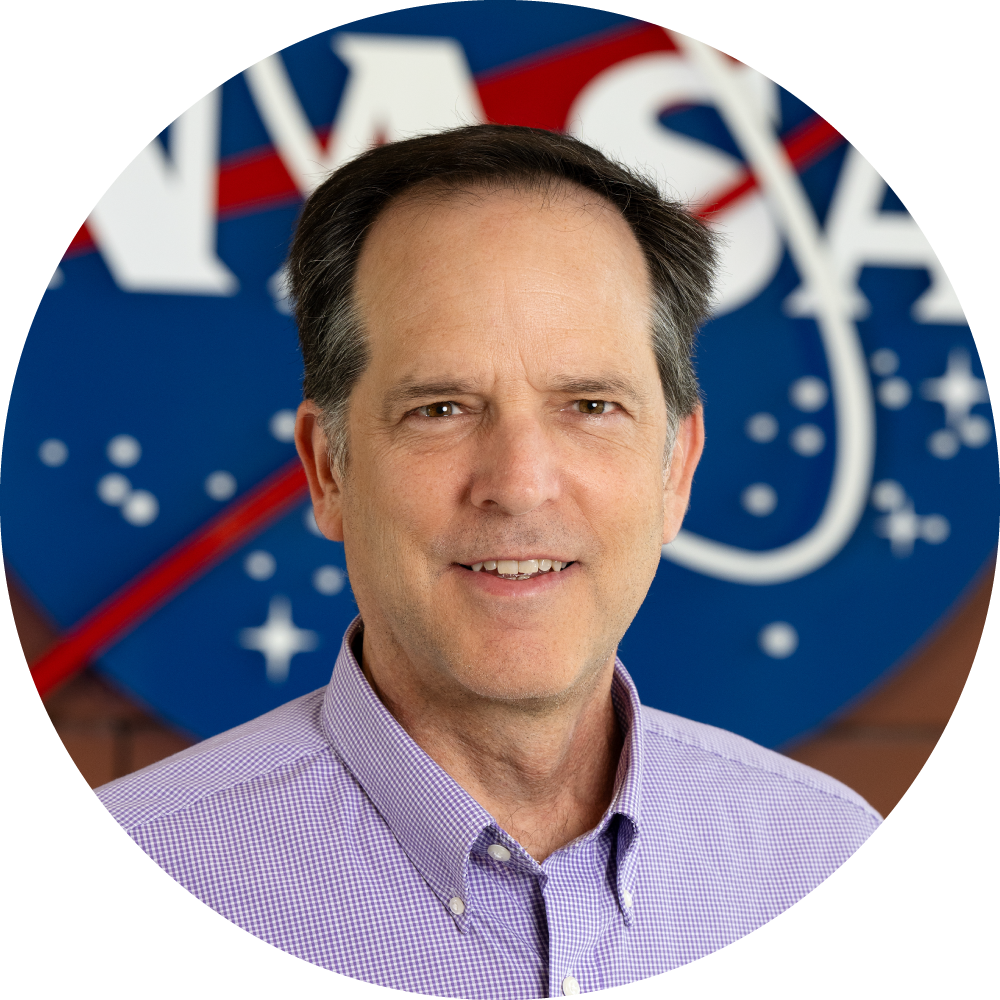
Dr. Paul M. Danehy
NASA Langley Research Center
Moon to Mars: Contributions of Optical Measurements to NASA’s Artemis Program
NASA and partners have embarked on a series of space missions to the moon and Mars, collectively known as the Artemis Program. This talk overviews the Artemis missions and details laser and optical measurement technique development and application to ground and flight tests related to, or inspired by, the Artemis program. Three measurement techniques have been applied to study vehicle launch, Earth and Mars entry, and lunar and Martian landing. Such optical instrumentation provides unique information to inform the underlying physics of space flight while also providing benchmark data for validating ever advancing predictive codes.
About the Speaker
Dr. Danehy graduated from the University of New Hampshire in Mechanical Engineering in 1989. He attended Stanford University obtaining both MS and PhD in Mechanical Engineering, finishing in 1995. Thereafter, he spent five years at the Australian National University (ANU) in Canberra as a post-doctoral researcher and then as a faculty member in the Department of Physics, where he applied laser-based methods to study hypersonic flows. Dr. Danehy has been at NASA Langley Research Center since 2000. As NASA’s Senior Technologist (ST) for Advanced Measurement Systems he leads and participates in the planning, advocacy, execution and review of basic and applied research to advance the state of the art in measurement technology with an emphasis on Entry, Descent and Landing (EDL).
Dr. Nathalie Picqué
Max-Born Institute, GERMANY

Frequency comb sensing and imaging
Optical frequency combs have revolutionized time and frequency metrology and enabled powerful techniques such as dual-comb interferometry. Using two combs with slightly different line-spacings, these motion-free interferometers achieve exceptional accuracy, speed and resolution, enabling compact integrated devices and advanced applications in spectroscopy, sensing and imaging.
About the Speaker
Nathalie Picqué is Director at the Max Born Institute for Nonlinear Optics and Short Pulse Spectroscopy and Professor of Physics at the Humboldt University in Berlin, Germany. Previously, she was a research group leader at the Max Planck Institute of Quantum Optics (Garching, Germany) and before that a researcher at the Centre National de la Recherche Scientifique in Orsay (France). She received her doctoral degree in physics from the University Paris-Saclay (France) in 1998. She and her team explore new insights in optical and molecular fundamental physics with advancing tools of laser science. Nathalie Picqué is a pioneer in the development and application of techniques of interferometry over broad spectral bandwidths with optical frequency combs. An Optica Fellow, N. Picqué is the recipient of numerous awards including the 2024 William F. Meggers Award of Optica.
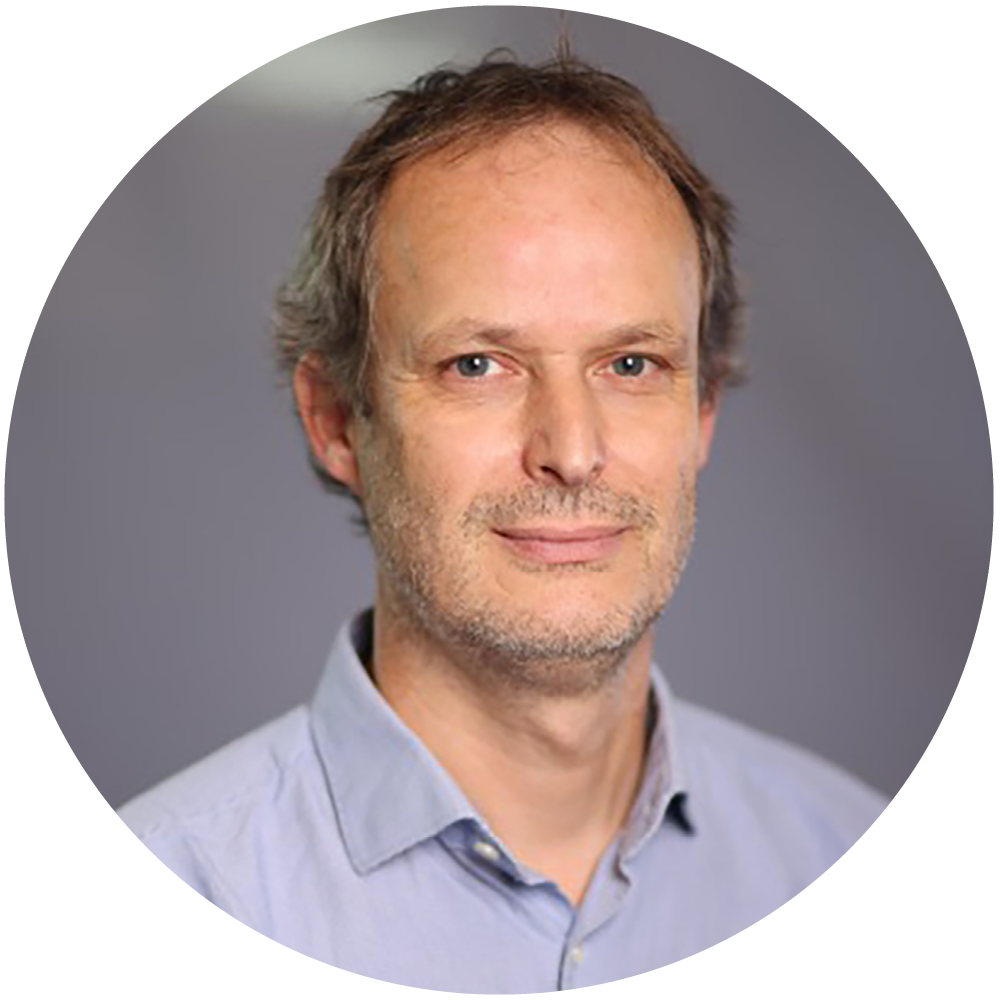
Dr. Stefano Bonora
The Institute of Photonics and Nanotechnologies , ITALY
Beyond static optics: how adaptive optics increase the performance of an optical system
From laser communication to laser processing and subcellular imaging, deformable optical components enable a higher levels of performance. We explore the shared challenges across these fields and the techniques pushing beyond the limits of conventional, static optics.
About the Speaker
Stefano Bonora is a Director of research at the Institute of Photonics and Nanotechnologies in Padua, Italy, since 2004. His work focuses on the development of innovative designs and methods for deformable optical devices.
He is the inventor of several types of deformable mirrors, adaptive lenses and methods for adaptive optics in microscopy, laser processing and laser communication.
In 2009, he co-founded Adaptica Srl, a company dedicated to portable and wearable ophthalmic instruments. In 2017, he founded Dynamic Optics Srl, specializing in deformable optical systems for applications in microscopy, ophthalmology, high-power lasers and free-space optical communication. Since 2020, he has served as the company’s CEO.
Throughout his career, he has also held research positions at the Hilase Laser Facility (2013–2015) and the Extreme Light Infrastructure – Beamlines (2017).
Professor Renjie Zhou
Chinese University of Hong Kong, CHINA

From probing quantum materials to in vivo imaging of animals with quantitative phase microscopy
Quantitative phase microscopy (QPM) has emerged as an important label-free imaging technique for bioimaging and material metrology. We recently pushed the performance limits of QPM to allow for probing the hidden electronic-behaviors in sub-atomic structures and imaging deep into live animals in vivo
About the Speaker
Renjie Zhou received his doctoral degree in Electrical and Computer Engineering from the University of Illinois at Urbana-Champaign in 2014, followed by postdoctoral training at the George R. Harrison Spectroscopy Lab at MIT. He is currently an Associate Professor at the Department of Biomedical Engineering at the Chinese University of Hong Kong, where he directs the Laser Metrology and Biomedicine Lab. His research interest is in quantitative phase microscopy (QPM) and its applications and he has successfully transferred his QPM technologies to industry. In recent years, he received the Croucher Innovation Awards from Croucher Foundation, the Excellent Young Scientists Fund from the National Natural Science Foundation of China, Hong Kong RGC Research Fellow Scheme, etc. He is a Fellow of SPIE, a member of the Hong Kong Young Academy of Sciences and currently serves on the editorial boards of Photonics Research and IEEE Photonics Technology Letters.
