Plenary Speakers

Tomáš Čižmár
Friedrich Schiller University Jena, Germany
Holographic control of light propagation turns hair-thin multimode fibres into minimally invasive microscopes reaching anywhere in the brain. I will review the physics and technology, and present in-vivo applications, including chronic and confocal imaging and blood-flow measurements.
Tomáš Čižmár is a professor of Wave Optics at Friedrich Schiller University Jena and head of the Fibre Research and Technology department at the Leibniz Institute of Photonic Technology (Leibniz-IPHT) in Jena. He leads the Holographic Endoscopy group at Leibniz-IPHT and the Complex Photonics group at the Institute of Scientific Instruments of the Czech Academy of Sciences in Brno. A physicist by training, he has worked throughout his career on interdisciplinary projects in biomedical photonics, mostly related to optical manipulation, digital holography and microscopy. His current research focuses on photonics in optically random environments, particularly multimode fibres, and on minimally invasive deep-tissue imaging in vivo. He is a co-founder of DeepEn GmbH, which develops holographic endoscopes for neuroscience research.
Sophie Hernot
Vrije Universiteit, Belgium
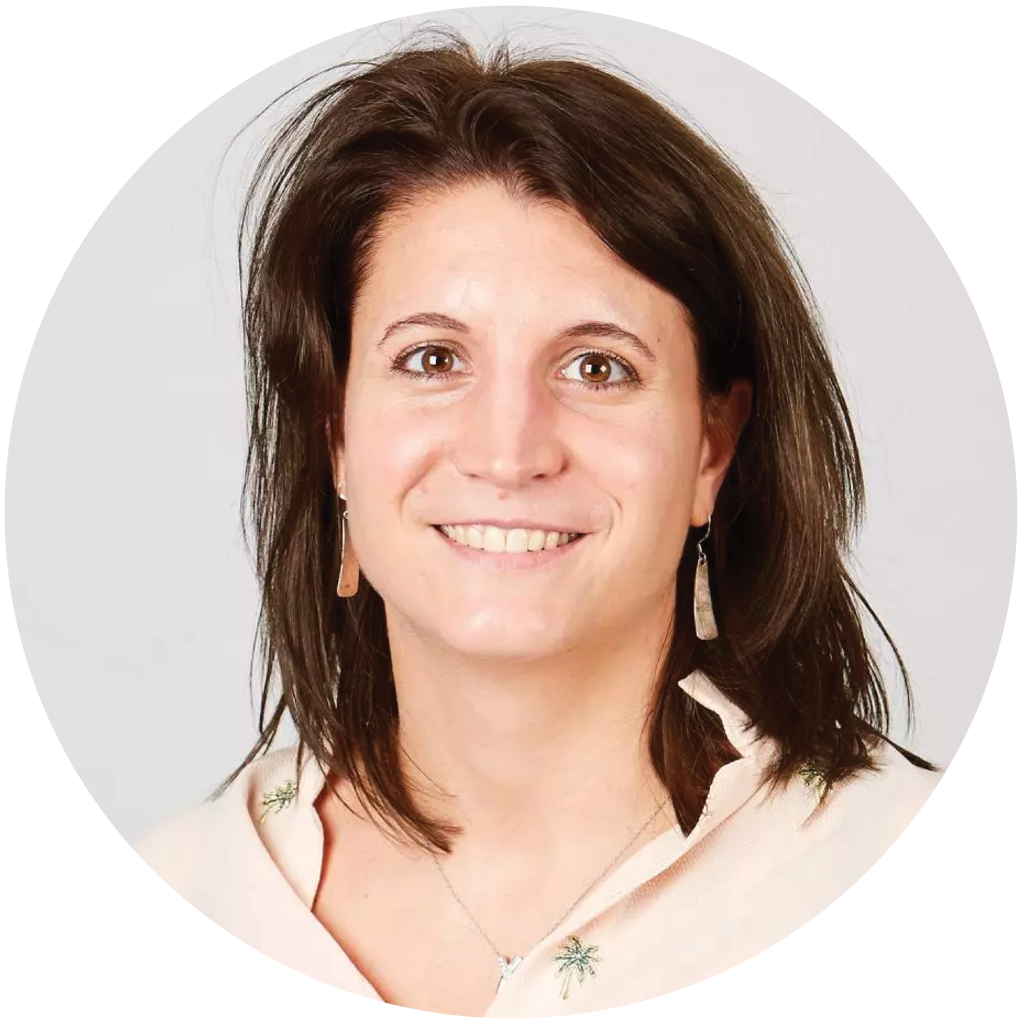
This presentation explores the use of Nanobodies as targeted imaging agents for fluorescence-guided surgery, leveraging their rapid pharmacokinetics and high tumor specificity. It further highlights the added value of fluorescence lifetime imaging, which provides complementary biological information, improves signal discrimination by reducing non-specific fluorescence and enables multiplexed imaging of multiple targets, surpassing the capabilities of conventional intensity-based fluorescence approaches.
Sophie Hernot, a bioengineer with a PhD in Medical Sciences, is a leading professor in the Molecular Imaging and Therapy research group at Vrije Universiteit Brussel, Belgium. Her research centers on developing, preclinically validating and clinically translating fluorescent and radiolabeled Nanobody-based tracers for image-guided applications. As the academic director of the In vivo Cellular and Molecular Imaging Core Facility, she also promotes the adoption of innovative imaging techniques across diverse research fields, enhancing in vivo understanding of biological processes.

Nimmi Ramanujam
Duke University, United States
Advances in optical imaging and artificial intelligence are expanding access to diagnostic capabilities beyond specialized healthcare settings. Yet reliable clinical decisions require more than accurate images and algorithms. Drawing on lessons from cervical cancer prevention, this talk introduces an engineering framework that connects trustworthy information generation, AI reliability and context-specific clinical decision-making. It explores how real-world variability can inform the continuous improvement of imaging technologies and clinical workflows, enabling more reliable and accessible healthcare across diverse populations.
Nirmala “Nimmi” Ramanujam is the Robert W. Carr Professor of Biomedical Engineering at Duke University and founder of the Center for Global Women’s Health Technologies. She brings engineers, clinicians and communities together to develop cancer technologies that address unmet needs, particularly for women underserved by healthcare systems.
Her research spans the cancer care continuum, from portable imaging, artificial intelligence and digital health tools for cervical cancer screening to localized immune therapies and metabolic imaging approaches for breast cancer. Her cervical cancer innovations are advancing beyond the laboratory through clinical implementation in Peru and Kenya, expanding access to care closer to women’s communities.
Central to her work is the belief that meaningful innovation begins with the people experiencing the problem. She also leads experiential education programs that prepare future innovators to design with communities. She is a Fellow of the National Academy of Engineering member, National Academy of Inventors and Fulbright Scholar.
