National Science Day
History
"The most important, the most fundamental, and the deepest investigations are those that affect human life and activities most profoundly. Only those scientists who have laboured, not with the aim of producing this or that, but with the sole desire to advance knowledge, ultimately prove to be the greatest benefactors of humanity." - C.V. Raman
National Science Day celebrates the life and legacy of C.V. Raman and his seminal discovery of modified scattering, later known as the Raman effect. Now, Raman's pioneering contributions have led to life-changing research, including the ability to read blood glucose without a needle, detect gas leaks from afar and much more.
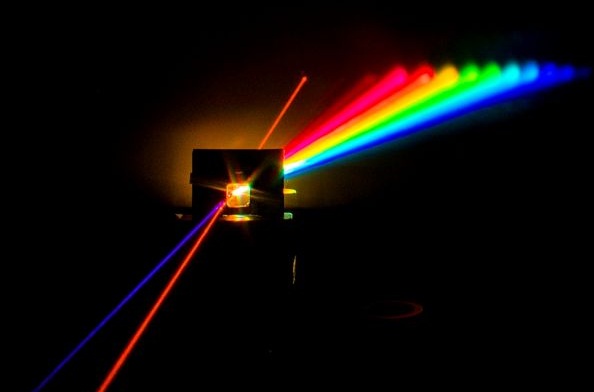
IMAGE OF THE WEEK
Raman Interaction
Generation of Raman sidebands in diamond. Two Gaussian laser beams, pump (purple), and Stokes (dark orange), enter a Raman medium (diamond) and generate a broadband of higher-order anti-Stokes.
—Aysan Bahari, Texas A&M University
RESEARCH NEWS
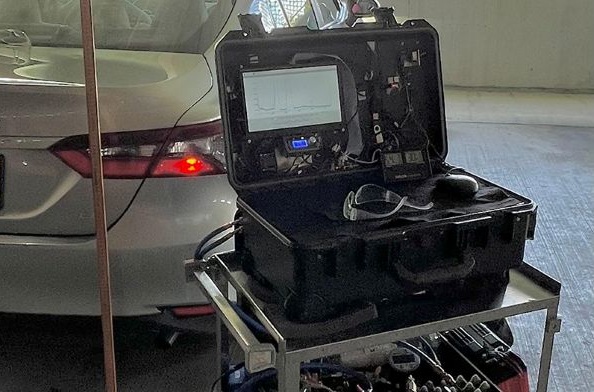
Portable Raman analyzer detects hydrogen leaks from a distance
The analyzer relies on a robust enhancement mechanism, by which blue pump light and Raman scattered light from hydrogen reflect a great number of times in a multipass cavity to dramatically improve detection sensitivity.

RESEARCH NEWS
Measuring blood glucose with light, not needles
People with diabetes need to check their blood glucose levels frequently, but no one likes sticking needles into their fingers.
With a Raman spectroscopy system, researchers collected the spectral signal of glucose with metrics comparable to commercially available CGM sensors.
OPTICA PUBLISHING GROUP
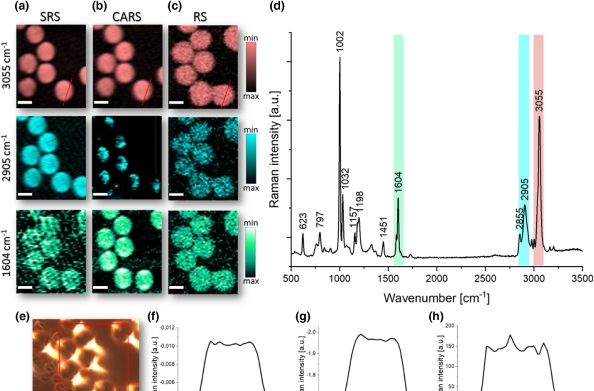
Three Raman techniques, all on the same device
Tandem Raman microscopy, which integrates SRS, CARS and [(R)RS], enables the comprehensive observation of Raman phenomena across diverse physical origins, encompassing both linear and nonlinear effects.
By including each technique on a single microscope, the system ensures complex sample characterization without the reference techniques in advanced optical imaging.
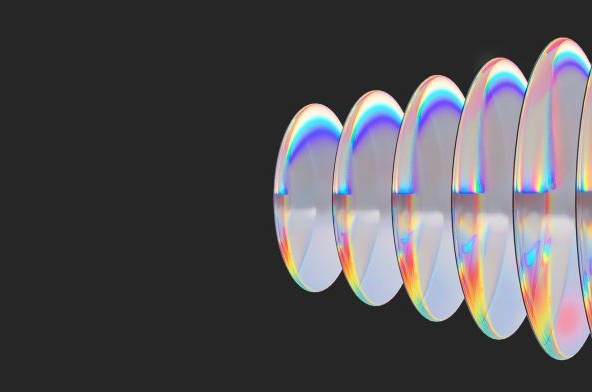
EVENTS
Have research to share? Present at ImageSense!
Show your breakthroughs in image acquisition, processing and display, including computational and neuromorphic imaging, spectroscopy and more at the Optica ImageSense Congress.
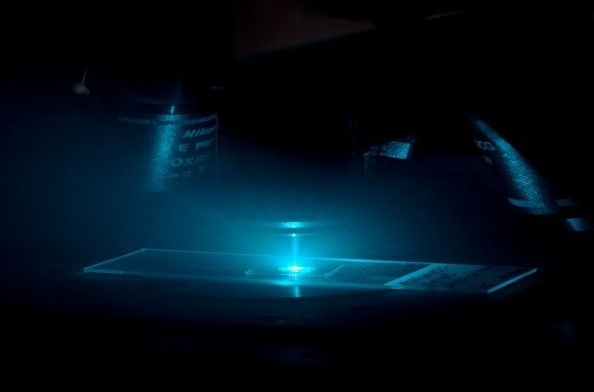
IMAGE OF THE WEEK
Ghostly Results
Raman microscopic investigation of acetamidophenol using an excitation wavelength of 488 nm. [From the 2011 After Image photo contest.]
—Sven Döring, Institute of Applied Physics, Germany.
OPN FEATURE
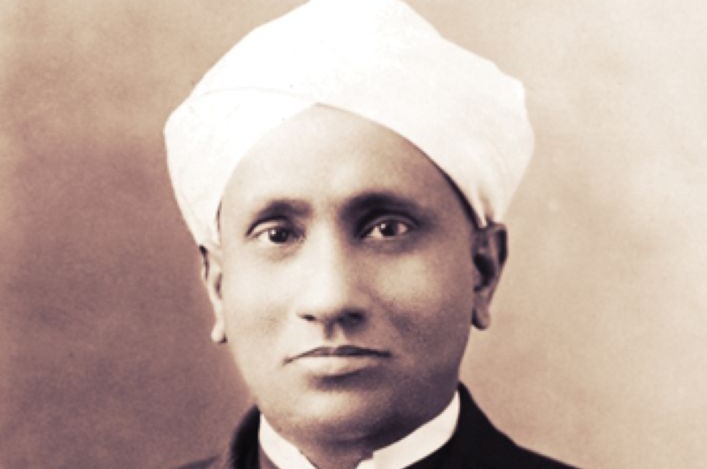
C.V. Raman and the Raman effect
In 1921, Nobel Laureate and Optica Honorary Member Chandrasekhara Venkata Raman looked out over the sea and observed its blue opalescence. Next, he determined that the color of the sea was due to light scattering by the water molecules—a phenomenon he called molecular diffraction.
In this OPN feature, learn about the life and legacy of one of the most important optical scientists of the 20th century.