Numerical Digital Twins in Biomedicine and Forensics
This webinar is hosted By: Tissue Imaging and Spectroscopy Technical Group
19 November 2026 10:30 - 11:30
Eastern Time (US & Canada) (UTC -05:00)
What connects laser treatment of psoriasis, photodynamic therapy for pancreatic cancer, and the forensic estimation of time since death? In each case, numerical digital twins make it possible to simulate many conditions and scenarios systematically—whether the goal is to identify an optimal treatment strategy or obtain a more accurate post-mortem interval (PMI) window.
This webinar will present examples from Dr. Wilk's work on numerical modelling for biomedical and forensic applications. The biomedical examples will cover pulsed dye laser treatment of psoriasis and photodynamic therapy for pancreatic cancer, including the simulation of light propagation, energy deposition, tissue response, and treatment parameters. The forensic example will focus on modelling post-mortem changes under different environmental and physiological conditions to support time-since-death estimation.
Through these case studies, Dr. Wilk will discuss how numerical digital twins are constructed, how they enable the efficient comparison of scenarios, and how their results can complement experimental, clinical, and forensic data. She will also address model assumptions, parameter uncertainty, validation, and practical limitations, presenting digital twins as focused tools for exploring treatment options and improving PMI estimation.
Subject Matter Level: Advanced - Assumes a strong understanding of the topic
What You Will Learn:
• How digital twins are used in biomedical and forensic applications
• Examples from laser therapy, photodynamic therapy, and time-since-death estimation
• Key considerations in model development, validation, and uncertainty
Who Should Attend:
• Researchers and students in biomedical optics, imaging, and spectroscopy
• Scientists and engineers working in computational modelling and digital twins
• Clinicians and researchers interested in translational biomedical applications and forensics
About the Presenter: Leah S. Wilk from Amsterdam University Medical Center
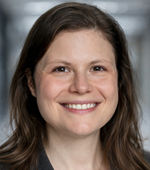 Dr. Leah S. Wilk is a physicist specializing in biophotonics, digital twins, and multiphysics modeling, with research spanning healthcare, forensic science, and translational optical technologies. Her work develops physics‑based computational models of light–tissue interaction and thermal dynamics, translating them into quantitative decision‑support tools. She has pioneered digital twin frameworks integrating anatomical modeling, optical and thermal simulations, and clinical or experimental data. In healthcare, she applied these methods to personalized light‑based therapies, while in forensic science she advanced digital twin approaches for quantitative time‑since‑death estimation. Her contributions have earned multiple scientific awards and recognition in national media.
