Advancing Visual Experiences Through Perceptual Graphics and Metrics
This webinar is hosted By: Intelligent Interfaces and Displays Technology Technical Group
12 November 2026 11:00 - 12:00
Eastern Time (US & Canada) (UTC -05:00)
In an era where visual experiences sit at the forefront of technology and design, how we perceive and measure images is more important than ever. As display technologies continue to evolve, from high dynamic range screens to advanced virtual reality systems and next-generation capture devices, the gap between what devices produce and what human observers actually see has become a critical challenge for both researchers and engineers. Perceptual graphics, which seeks to bridge this gap by understanding how humans perceive color, contrast, shape, and depth, is central to building systems that deliver accurate and compelling visual content.
This webinar brings together leading experts to explore the intersection of human perception, perceptual metrics, and modern display technologies. Attendees will gain a comprehensive understanding of the fundamentals of perceptual graphics and learn how these principles are applied in real-world systems that demand high-fidelity visual representation. We will also examine visual metrics: the mathematical frameworks and tools used to predict and optimize perceived image quality across a wide range of devices, capture systems, and media types. Moreover, we discuss best practices for leveraging these metrics during design and development.
Through expert presentations and case studies, we will highlight real-world examples where perceptual data has driven meaningful innovation in display technologies, from improved rendering algorithms to objective quality evaluation pipelines. By the end of this session, attendees will be equipped with both a conceptual framework and practical insights that can inform their own work, whether they are developing display hardware, designing image processing pipelines, or simply interested in how technology shapes the way we see the world.
This webinar is hosted by the Intelligent Interfaces and Displays Technology Technical Group. It is designed for students and early-career researchers with a basic understanding of graphics, imaging, or display technologies who wish to deepen their knowledge in this rapidly evolving area.
Subject Matter Level: Intermediate: Assumes a basic understanding of the topic
What You Will Learn:
• 3D printing/additive manufacturing of polymeric nanostructures with multifunction properties, such as 3D printed circuits and electronics
• Energy harvesting prototypes, using existing EM radiation (e.g. GSM, FM, WiFi)
• 3D printed flexible electrodes for batteries
• Large-scale 3D photocatalytic/self-cleaning filters and devices
• Industrial scale thermoelectric devices
Who Should Attend:
• Researchers
• Physicists
• Engineers
About the Presenters:
Qi Sun from New York University
 Qi Sun is an assistant professor at New York University. Before joining NYU, he was a research scientist at Adobe Research. He received his PhD at Stony Brook University. His research interests lie in VR/AR, perceptual computer graphics, computational display, and applied perception. He is a recipient of the IEEE Virtual Reality Best Dissertation Award. With colleagues, his research has been recognized as several best paper and honorable mention awards at ACM SIGGRAPH, IEEE ISMAR, IEEE VR, IEEE VIS, and ACM SAP.
Kenichiro Masaoka from NHK Science & Technology Research Laboratories
 Kenichiro Masaoka received the B.S. degree in electronics engineering, the M.S. degree in energy engineering, and the Ph.D. degree in engineering from Tokyo Institute of Technology, Tokyo, Japan, in 1994, 1996, and 2009, respectively. Currently, he is the Chair of the Subcommittees on Color Metrology and Spatial Measurements for ICDM. He is on loan to the NHK Foundation with the NHK Science and Technology Research Laboratories, Tokyo. He was a SID Fellow, in 2021.
Dongyeon Kim from The University of Cambridge
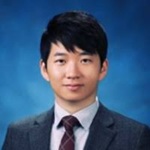 Dongyeon Kim is a Research Associate (Postdoctoral Researcher) at the University of Cambridge, where he works with Prof. Rafal Mantiuk. He received his Ph.D. in Electrical and Computer Engineering from Seoul National University, where he was a member of the Optical Engineering and Quantum Electronics Lab, formerly led by Prof. Byoungho Lee. He also received his Bachelor’s degree in Electrical and Computer Engineering from Seoul National University.
During his Ph.D., Kim primarily focused on improving the perceptual quality of next-generation 3D/4D displays. In his current postdoctoral research, he is working on developing visual perception models and quality metrics for next-generation displays, including AR, 3D, and 4D displays, with the goal of bridging the gap between machine perception and human visual perception. His research interests broadly include AR/VR, computational optics, computational 3D displays, visual perception, and computer graphics.
