Large-Scale Photonic Integrated Circuits for AI Computing
This webinar is hosted By: Optical Communications Technical Group
09 October 2026 13:00 - 14:00
Eastern Daylight/Summer Time (US & Canada) (UTC -04:00)
Modern AI and scientific computing demand performance beyond the limits of conventional electronics. Photonic computing offers ultrahigh bandwidth and intrinsic parallelism, but its adoption has been hindered by limited analog precision and system scalability.
In this webinar hosted by the Optical Communications Technical Group, Zaijun Chen will present a mixed-precision optoelectronic computing architecture that overcomes these limitations through hardware-software co-design. Using hybrid integration of lithium-niobate and silicon photonics, we demonstrate coherent amplitude- and phase-based computation at up to 128 GS/s. He will also discuss new results from scaling up these circuits to 256x256 channels, toward energy-efficient, real-world, high-performance photonic computing.
Subject Matter Level: Introductory - Assumes little previous knowledge of the topic
What You Will Learn:
• Quantization-aware mixed-precision computing overcomes analog noises
• Computing clock rates up to 128 GS/s using TFLN-Silicon integration
• Scale up homodyne photonic computing to 256x256 channels for 1000 TOPS throughput
Who Should Attend:
• Optoelectronic engineers, researchers, students
• AI computing experts
• Photonic integration and packaging
About the Presenter: Zaijun Chen from UC Berkeley/ Opticore Inc.
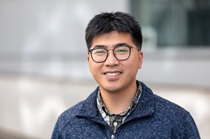 Zaijun Chen an assistant professor at the EECS department of UC Berkeley, and CEO and co-founder of optical computing startup Optiocre Inc. He received his Ph.D. in Physics from the Max-Planck Institute of Quantum Optics and he was a postdoc with Prof. Dirk Englund at MIT, where he developed photonic AI accelerators and neuromorphic devices using integrated photonics and co-packaged optics.
He is a recipient of the 2023 Optica Foundation Challenge Award, the 2023 SPIE best paper for Artificial Intelligence and Machine Learning, the OECC/PSC 2022 Best Paper Award, the 2022 Sony Faculty Innovation Award, and the 2018 Rao Prize for the best student talk at the international symposium of molecular spectroscopy. He serves on the Early Career Editorial Board for Advanced Photonics.
