Optica conversation with Malte Gather on Biointegrated microlasers: technologies, applications, and emerging developments

20 March 2026 10:00 - 11:00
Eastern Daylight/Summer Time (US & Canada) (UTC -04:00)
Engaging with authors on the high-impact research published in Optica has never been so easy. In our Light Conversations webinar series, recently published authors talk with the Journal’s editors and webinar participants about how their careers have evolved, what they’re working on, and how others can follow in their footsteps.
In our next Light Conversations event, former Optica Editor-in-Chief Prem Kumar, will interview recently published mini-review author Malte Gather about his article "Biointegrated microlasers: technologies, applications, and emerging developments”. Optica Editor-in-Chief Thomas Krauss and Deputy Editor Christophe Dorrer will introduce the speakers and invite audience members to ask questions.
Topics to Be Covered
- Malte's start in the field of organic electronics and biophotonics, and his tips for those seeking to enter it
- His current research, and how his work has evolved over time
- His views on the direction of the field, including its most exciting developments and its biggest challenges
- The benefits of writing a mini-review for Optica, his personal experience of writing this article, and the publication process at Optica
Who Should Attend:
- Anyone interested in biophotonics
- Those who’d like to learn about writing and publishing a mini-review in Optica
Featured Author
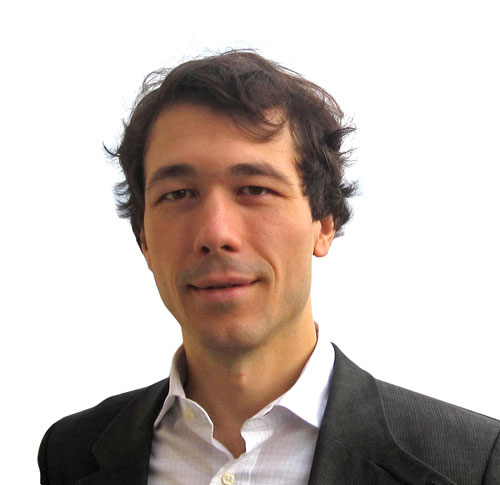
Malte Gather
University of Cologne, Germany and University of St Andrews, UK
Prof. Dr. Malte C. Gather is a prominent physicist and professor specializing in biophotonics and organic electronics. He is best known for his pioneering invention of the "living laser"—using single biological cells to generate laser light—which earned him a spot in the Guinness Book of World Records.
Current Positions
- Alexander von Humboldt Professor: Since 2019, he has held this prestigious position at the University of Cologne, where he established and leads the Humboldt Centre for Nano- and Biophotonics (HCNB).
- Professor at University of St Andrews: He maintains a co-appointment at the University of St Andrews in Scotland, where he previously served as a full professor starting in 2013.
Key Research & Achievements
- Living Lasers: In 2011, while at Harvard, Gather and his team successfully used a green fluorescent protein (GFP) within a living cell as a laser medium, allowing cells to emit laser light without being harmed. This technology is now being developed for cell tracking and barcoding in cancer research.
- Biocompatible OLEDs: He develops ultra-thin, flexible Organic Light-Emitting Diodes (OLEDs) for medical applications, such as optogenetic stimulation to treat neurodegenerative diseases like Parkinson’s or to restore vision.
- ERC Advanced Grant (2023): He was awarded this grant for his work on overcoming the fundamental dispersion limit in optical interference using ultra-strong light-matter coupling.
- Polariton Filters: His lab recently developed angle-independent color filters that do not change color when viewed from different angles, a breakthrough for displays and sensors.
Academic Background
Gather studied physics and material sciences at RWTH Aachen University and Imperial College London, eventually receiving his PhD from the University of Cologne in 2008. He completed postdoctoral work at the University of Iceland and Harvard Medical School before becoming an assistant professor at TU Dresden.
Webinar Hosts

Thomas Krauss
Editor-in-Chief, Optica University of York, UK
Thomas Krauss is a distinguished researcher and professor of photonics at the University of York, United Kingdom, where he serves as Head of the Photonics group and the Nanocentre Cleanroom, as well as CEO of Phorest Diagnostics, a company he co-founded in 2022. Widely recognized for his seminal work in nanophotonics and photonic crystals, Krauss’s research spans a range of areas, including silicon photonics, biosensing and imaging, semiconductor lasers, nonlinear optics, solar cells, and related fields. He is a Fellow of Optica, the Institute of Physics, and the Royal Society of Edinburgh, and has served as a committee member/chair for major conferences, including PECS, CLEO, IPRN, ECIO, EMRS, OSA Slow and Fast Light, Group 4 Photonics, and SPIE Europe.
Krauss has been engaged in editorial roles with Optica since it launched in 2014. “My enthusiasm for Optica and what it stands for, as a society journal run by its members for the community, has only grown,” Krauss commented. “I consider it a great privilege to be entrusted with this role.” He becomes the Journal’s third editor-in-chief, following Prem Kumar, who served from 2020 – 2025.
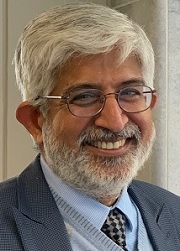
Prem Kumar
Northwestern University, USA
Prem Kumar is the editor-in-chief of Optica. Kumar is professor of information technology in the Department of Electrical and Computer Engineering and director of the Center for Photonic Communication and Computing in the McCormick School of Engineering and Applied Science at Northwestern University, U.S.A. He also holds an appointment as professor of physics and astronomy in the Weinberg College of Arts and Sciences at Northwestern University. His research focuses on nonlinear and quantum optical devices for applications, including photonic entanglement in quantum information networks; novel quantum light states for precision measurements, imaging, and sensing; and networked classical optical communications.
Kumar is an Optica Fellow who has been active on various Optica conference program committees. He led a student chapter, served on Optica's Publications Council, and was a member of a committee to review Optics Express. Kumar was a topical editor for Optics Letters for ten years and guest edited the Journal of the Optical Society of America B centennial article collection in 2016.

Christophe Dorrer
Deputy Editor, Optica University of Rochester, USA
Christophe Dorrer is a Distinguished Scientist at the University of Rochester's Laboratory for Laser Energetics (LLE). He is also the Co-founder and CTO of Aktiwave, a company specializing in advanced optical sources and diagnostics.
Professional Roles & Impact
- University of Rochester: He has been with the University for over 20 years, progressing from a postdoctoral fellow (1999–2001) to a Senior Scientist (2009–2022) and now his current role.
- Editorial Leadership: He serves as the Deputy Editor for Optica, having previously held associate editor positions for Optics Express.
- Bell Laboratories: Before his long tenure at Rochester, he was a Member of Technical Staff at Bell Laboratories (2001–2005), focusing on optical telecommunications diagnostics.
Key Research & Recognition
Dorrer is widely recognized for his contributions to the control and characterization of ultrafast optical pulses.
- Honors: Named an Optica Fellow in 2015 for his invention of methods and devices that impacted fields ranging from high-energy lasers to telecommunications.
- Major Projects: He is a lead figure in the development of the FLUX (Fourth-generation Laser for Ultrabroadband eXperiments) facility, which aims to generate high-energy incoherent ultraviolet pulses to mitigate laser-plasma instabilities in fusion research.
- Expertise: His research includes spectral phase interferometry, optical parametric amplification, and high-dynamic-range pulse characterization.
Selected Recent Publications
- Future challenges and potential solutions for large-aperture nonlinear materials (March 2026).
- Generation of high-energy incoherent ultraviolet pulses with broadband parametric amplification (March 2026).
- Impact of longitudinal phase-matching variations on three-wave nonlinear interactions (2023).
