Francisco J. Duarte
Francisco J. Duarte
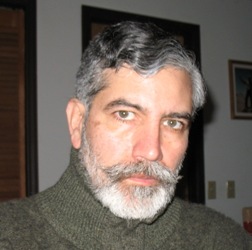
Source: Francisco J. Duarte
Francisco Javier Duarte is a laser physicist, quantum physicist, inventor, and author. He was born in Santiago de Chile and has resided in the United States since 1983. Duarte studied mathematics and physics at Macquarie University (Australia) where he was a student of the quantum physicist John C. Ward. At Macquarie, in 1978, he was the first to be awarded a First Class Honours in physics for his thesis Excitation Processes in Continuous Wave Rare Gas-Metal Halide Vapour Lasers. Also at
Duarte is editor/author of some 17 scholarly books including Dye Laser Principles (1990), High-Power Dye Lasers (1991), Tunable Lasers Handbook (1995), Tunable Laser Applications (1995, 2009, 2016), and Organic Lasers and Organic Photonics (2018, 2024). He is co-author of Quantum Entanglement Engineering and Applications (2021) and sole author of Tunable Laser Optics (2003, 2015), Fundamentals of Quantum Entanglement (2019, 2022), Quantum Optics for Engineers (2014, 2024), and Quantum Clear: Quantum Mechanics Free of Paradoxes (2026). He has contributed originally to coherent imaging, directed energy, electrically-pumped organic semiconductor coherent emission, extremely-expanded laser beams, heat conduction, high-power tunable lasers, laser metrology, liquid and polymer-nanoparticle organic gain media, narrow-linewidth tunable laser oscillators, N-slit quantum interferometry, polarization rotation, quantum entanglement, and space-to-space interferometric communications. He is also the author of the generalized multiple-prism grating dispersion theory and has pioneered the use of Dirac’s quantum notation in interferometry and classical optics.
Duarte’s contributions have been independently applied in numerous fields: from astronomy to spectroscopy, from atomic physics to laser isotope separation, from biology to medicine, from laser pulse compression to laser cavity design, from nanophotonics to nanoengineering, and from quantum entanglement to quantum philosophy.
Duarte was elected Fellow of the Australian Institute of Physics in 1987 and Fellow of Optica in 1993. He has served as Topical Editor for Applied Optics (1990-1996) and Advisory Editor for Optics Letters (1999-2004). He was an early participant of Optica’s Fellow Travel and Distinguished Lecturer programs delivering numerous lectures in Chile and has given invited lectures throughout the USA, Russia, Europe, and the East. Duarte has received various professional recognitions including the Engineering Excellence Award (1995), for the invention of the N-slit laser interferometer, and the David Richardson Medal (2016), "for seminal contributions to the physics and technology of multiple-prism arrays for narrow-linewidth tunable laser oscillators and laser pulse compression," from Optica.
Document Created: 26 July 2023
Last Updated: 28 July 2026
