Latest Design Challenges - Where Theory Meets Practice
This webinar is hosted By: Thin Films Technical Group
13 May 2026 10:45 - 11:45
Eastern Daylight/Summer Time (US & Canada) (UTC -04:00)
In the first webinar on the OIC 2025 Design Challenge, we consider a problem of complicated target shape fit. The design problem is formulated in a standard way, and many different tools, including open-source and commercial software packages, exist to solve it. A non-trivial part of the challenge is connected with design distortions during the evaluation process, which is performed by web-based software. During evaluation, the thicknesses of the submitted design and its refractive indices may be subjected to variations. This resembles a real-world situation, when the deposited thicknesses and optical properties of materials can differ from the theoretical values during the design and production. For the sake of challenge, we suppose that the introduced variations are completely stable, and therefore repeat from run to run if the same design is submitted.
Web-based software can be used as a virtual spectrophotometer. During the design challenge, it is possible to obtain the transmittance of the produced design and try to obtain information on the design parameter changes. Since the variations of design parameters are stable, it is possible to introduce design corrections in order to improve the design quality after production and to achieve a higher final score.
Subject Matter Level: Intermediate- Assumes basic knowledge of the topic Intermediate
What You Will Learn:
• Design challenges and the ways to overcome typical design problems
• Design - production chain and the importance of proper design corrections
• Basic ideas of design reverse-engineering
Who Should Attend:
• Thin film designers
• Coating Process engineers
• Those who are interested in multilayer coating theory and applications
About the Presenter: Michael Trubetskov from Max-Planck Institute of Quantum Optics
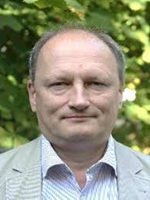 Dr. Michael Trubetskov graduated from Physics Faculty of Moscow State University, obtained a Ph.D. Degree in 1985 and a Dr. of Sc. Degree in Mathematical and Theoretical Physics in 2002.
In 2012, he moved to Germany and became a senior scientist at the Max Planck Institute of Quantum Optics in Garching b. Munich.
Dr. Trubetskov specializes in thin-film optics, coating design and characterization, optics, electrodynamics, applied mathematics, laser science in biomedical applications, computational mathematics and physics, machine learning and data science, computer science, software development, and parallel computing.
Dr. Trubetskov is a senior member of the Optica (former OSA) and the International Society for Optical Engineering (SPIE). He is the winner and the organizer of Optical Interference Coating Meetings Design Contests since 1995. Dr. Trubetskov serves as a reviewer for academic journals of Optica. Dr. Trubetskov has more than 300 publications.
