Intra-Data Center Optics Powering AI
03 March 2026 9:00 - 12:00
Eastern Time (US & Canada) (UTC -05:00)
Intra-Data Center Optics Powering AI
Join our webinar series as we dive into the key aspects shaping the future of optical networks
Artificial intelligence is redefining the scale, speed, and architecture of modern data centers. As AI workloads continue to expand, intra-data center optical interconnects have become mission-critical infrastructure, enabling unprecedented bandwidth, lower latency, and improved energy efficiency. Join global industry leaders from Meta, Google, and NTT as they examine how optical technologies are evolving to meet the explosive demands of AI-driven systems. This ON2030 program will explore next-generation architectures, photonic integration, power efficiency challenges, and the future of optical connectivity inside hyperscale data centers.
| 03 March 2026 9:00 AM ET; 15:00 CET | ||
| About the facilitators for this event |
| About the Optical Networks 2030 Series |
Sponsor the Series (Details coming soon) |
On-Demand Previous Webinars |
.
Moderators

David Hillerkuss
Nokia
Dr. David Hillerkuss is a prominent expert in optical networking and communications technology, currently serving as a key innovator within Nokia. His work focuses on developing modern, efficient network infrastructures to support the "AI Era".
Professional Roles & Affiliations
- Nokia: Following the planned acquisition of Infinera by Nokia, Hillerkuss is an integral part of the combined optical networking leadership.
- Infinera: He previously held significant roles at Infinera, where he moderated industry-shaping webinars and drove standards for optical networks.
- Industry Leadership: He is a frequent moderator and speaker for Optica (formerly OSA) webinar series, such as "Optical Networks toward 2030" (ON2030), focusing on high-speed optics like 1.6T ZR/ZR+.
- Academic Background: He earned his doctorate at the Karlsruhe Institute of Technology (KIT), where he specialized in high-capacity optical transmission systems.
Key Contributions & Awards
- World Record Transmission: He was part of the team that achieved a 32.5 Tbit/s Nyquist WDM transmission using a single laser, a milestone in spectral efficiency.
- IOWN Global Forum Contributor Award: Recognized in May 2025 for his work on energy efficiency and sustainability in technology working groups.
- Charles Kao Award (2015): Received the IEEE Communications Society award for the Best Optical Communications & Networking Paper.
- Research Areas: His extensive publication record covers OFDM (Orthogonal Frequency-Division Multiplexing), silicon modulators, and CV-QKD (Continuous-Variable Quantum Key Distribution).
Jelena Pesic
Nokia
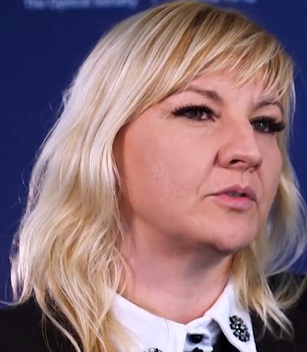
2018 OSA Ambassador Jelena Pesic is a research engineer with NOKIA Bell Labs, based in Paris, France. After receiving a Masters degree in Electrical Engineering from the faculty of Electrical Engineering at the University of Belgrade in Serbia, she completed a 6 month internship with the engineering school of Telecom Bretagne, located in Brest, France. This involved working on the optical access network, GPON (Gigabit Passive Optical Network) under the supervision of profs. Annie Gravey and Philippe Gravey. This rich experience encouraged her passion for research and subsequent enrolment into optics.
Jelena then completed her PhD in the subject of proactive restoration of backbone optical networks, with the French operator Orange Labs, under the supervision of Esther Le Rouzic and prof. Laurent Dupont. In recognition of this work, she received the award of best paper at the conference ONDM2011 (Optical Network Design and Modelling)
Following her PhD, she carried out two postdoctoral studies. During the first of these, she worked for INRIA (French National Research Institute) on the European project SASER, designing MAC layer for TWIN optical networks. During the second, she worked with Telecom Bretagne.
Jelena’s current position with Nokia Bell Labs affords her the opportunity to be part of future product innovation, as well as several European projects like SENDATE and ORCHESTRA. She has served as a technical committee member for OSA and IEEE international conferences, reviewed articles submitted for peer-review and accepted invitations to write and publish articles at various international worldwide conferences.

Chigo Okonkwo
CUbIQ Technologies
Chigo Okonkwo is a Professor leading the high capacity optical transmission laboratory of the Electro-Optical Communications Group at the Institute for Photonics Integration, TU/e. He currently works on two key areas: Firstly, he is working to maximise the capacity of presently deployed single-mode fibre systems by employing advanced-coded modulation schemes and Probabilistic/Geometrically shaped signals and low complexity digital signal processing. More importantly, he is working on future proof transmission systems based on Space Division Multiplexing, and developing the new optical components required to scale the capacity of the optical transmission systems towards Petabit/s transmission. This can be done by exploiting the various spatial channel of a multi-mode fibre or multi-core fibre.
Chigo’s research is also focused on the development of new measurement systems, and his work has led to a provisional patent and several critical publications in Nature Photonics, JLT and Optics Express. Since 2010, Chigo has built up a world-class high capacity optical transmission laboratory and collaborates with several industrial partners.
Over 99% of all data generated will go through an optical fibre. Optical transmission systems form the foundation of the Internet and are slowly running out of capacity. We need a paradigm shift in how we design and test our systems to develop next-generation low-energy, robust and high capacity photonic networks
Academic Background
Chigo Okonkwo graduated in 2002 with a Masters Honours degree in Telecommunications and Information systems at University of Essex, United Kingdom. After earning his PhD in Optical signal processing at the University of Essex, he joined COBRA TU/e as a Post-doctoral researcher in 2010. In that period, he worked on schemes and architectures for High Capacity In-Building and Dynamic Optical Access Networks within the EU ICT projects (ALPHA, POF-PLUS and EURO-FOS) and a joint research framework project with South Korean research organization ETRI. Since 2014, he is tenured at the Department of Electrical Engineering.
Between 2011 and 2015, Chigo worked on the EU project MODEGAP, and his research focuses on Ultra-high capacity space division multiplexed transmission systems. From advanced multi-dimensional modulation formats to the optical and digital signal processing schemes required for such systems. Since 2018, Chigo is a member of the Center for Quantum Materials and Technology (QT/e) working to advance the National agenda on Quantum secure communications.
Chigo is a Technical program committee member for European conference on optical communications (ECOC) since 2014. In 2018, he was the Sub Committee Chair for Digital Signal Processing track at ECOC and the General Chair for OSA Advanced photonics congress conference on signal processing for photonics. As a Senior Member of the professional organization IEEE, he serves as a reviewer and has (co)authored more than 200 publications in conferences and journals.
Since May 2025, he is Full Professor and Chair of Secured Ultra High Capacity Transmission
Recent Publications
-
Measurement of Mode Field Expansion in Tapered Space-Division Multiplexing Fibers
IEEE Photonics Technology Letters (2026)Liudmila Silanteva,Amado M. Velazquez-Benitez,Vincent van Vliet,Menno van den Hout,Marianne Bigot-Astruc,Adrian Amezcua Correa,Pierre Sillard,Frank Achten,Chigo Okonkwo,Thomas Bradley
-
Characterization of Stimulated Raman Scattering in Field-Deployed Coupled-Core Multi-Core Fibers
Journal of Lightwave Technology (2026)Giammarco DiSciullo,Lucas A. Zischler,Divya A. Shaji,Qi Wu,Ruben S. Luís,Robert Emmerich,Menno van den Hout,Benjamin J. Puttnam,Georg Rademacher,Chiara Lasagni
-
Coherent Free-Space Optical Communications with Concurrent Turbulence Characterization in a Terrestrial Urban Link
(2026)Vincent van Vliet,Menno van den Hout,Kadir Gümüş,Eduward Tangdiongga,Chigo Okonkwo -
Evaluation of Inter-Mode-Group Stimulated Raman Scattering on Multi-Mode Fibers
2025 IEEE Photonics Conference (2025)Lucas Alves Zischler,Julian Schneck,Giammarco Di Sciullo,Besma Kalla,Stefano Gaiani,Ruben S. Luís,Daniele Orsuti,Pierre Sillard,Chigo Okonkwo,Pierpaolo Boffi
-
19.2 THz S+C+L Transmission in a Field Deployed, Randomly-Coupled, Multicore Fiber
2025 European Conference on Optical Communications (ECOC) (2025)R.S. Luis,G. Di Sciullo,M. v.d. Hout,R. Emmerich,N. Braig-Christophersen,Q. Wu,B.J. Puttnam,F. Graziosi,A. Mecozzi,A. Marotta
Ancillary Activities
- Director, PhotonQuant B.V.
Speakers

George Papen
George C. Papen is a prominent electrical engineer and Professor Emeritus at the University of California, San Diego (UCSD). His research spans advanced photonic systems, optical communications, and networking infrastructure.
Professional Background & Research
- Current Focus: He specializes in lightwave technology for networking and computing, including optical circuit switches and transceivers for large-scale data centers.
- Academic Career: Before joining UCSD in 2002, he was a professor at the University of Illinois at Urbana-Champaign for over a decade.
- Industry Collaboration: He has served as a Visiting Faculty Researcher at Google, working on optical fabric architectures to improve the efficiency of global internet infrastructure.
- Environmental Impact: He leads the Carbonless Cloud Computing Lab, which explores ways to extend the lifecycle of IT hardware to reduce the carbon footprint of digital infrastructure.
Key Contributions
- Textbook Author: He co-authored the textbook Lightwave Communications with Richard E. Blahut, covering the mathematical and physical foundations of optical systems.
- Remote Sensing: Early in his career, he developed lidar systems for atmospheric research, including systems used at the South Pole to characterize the upper atmosphere.
- Optical Networking: He is a key contributor to the RotorNet project, which focuses on developing practical, microsecond-scale optical networking for data centers.

Kazuya Anazawa
NTT Innovation Laboratories
Kazuya Anazawa is a prominent researcher at NTT Network Innovation Laboratories in Japan, specializing in optical networking and Software-Defined Networking (SDN) for next-generation data centers.
Professional Profile
- Current Role: Researcher at the Network Innovation Laboratories, NTT Corporation.
- Academic Background: He earned both his Bachelor’s and Master’s degrees in Computer Science and Engineering from the University of Aizu (2016 and 2018, respectively).
- Industry Involvement: Serves as a coordinator for the IOWN Global Forum, specifically focusing on AI interconnect infrastructure.
Key Research Areas
Anazawa's work primarily focuses on enhancing the efficiency and scalability of data center networks through:
- Optical-Circuit-Switching (OCS): Developing verification algorithms for fiber topology and quality to improve energy efficiency.
- SDN Controllers: Leading the first demonstrations of SDN controllers specifically designed for open optical-circuit-switched networks.
- AI Data Center Infrastructure: Researching optical networking technologies that serve as enablers for AI-driven data centers.
- Network Digital Twins: Investigating Digital Twin operations for optical networks to enable flexible lightpath management and remote transponder control.
Notable Publications
- "Experimental Evaluation of an SDN Controller for Open Optical-circuit-switched Networks" (2025) – Journal of Optical Communications and Networking.
- "Efficient Verification Algorithm for Topology and Quality of Optical Fibers..." (2025) – Journal of Optical Communications and Networking.
- "Design of Multiple-Plane Twisted and Folded Clos Network..." (2025) – IEEE Transactions on Network and Service Management

Xu Wang
Meta
Xu Wang is data scientist for Meta. He has a background in Biostatistics and Machine Learning.
