Design and Application of Standards for Performance Assessment and Quality Control of Fluorescence Imaging Systems
This webinar is hosted By: Tissue Imaging and Spectroscopy Technical Group
04 November 2025 11:00 - 12:00
Eastern Time (US & Canada) (UTC -05:00)
This is one of a two-part webinar series on Optical Phantoms for Fluorescence-Guided Surgery (FGS), exploring their essential role in imaging research and clinical translation. The series will cover foundational concepts and practical implementation examples from academic and industry perspectives.
The first session focuses on theory and principles of optical fluorescence phantoms, including remarks on standardization efforts. Topics will include phantom design considerations and their use in system calibration and performance benchmarking. The session aims to provide a solid foundation for understanding how phantoms support reproducibility and comparability in FGS and endoscopy research.
Subject Matter Level: Intermediate - Assumes basic knowledge of the topic
What You Will Learn:
• Materials, fabrication techniques, and design considerations for creating reproducible phantoms.
• Standardization of optical fluorescence phantoms and good practices.
• Reporting of standardization outcomes.
Who Should Attend:
• This webinar is ideal for students, researchers, and clinicians involved in utilizing fluorescence for surgical guidance.
About the Presenter: Dimitris Gorpas from Helmholtz Zentrum München
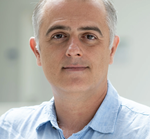 Dr. Dimitris Gorpas, a graduate of the Technical University of Athens, earned his Ph.D. in Engineering. He conducted postdoctoral research at the Centre for Research and Technology Hellas (CERTH) in Thessaloniki and later joined the University of California, Davis as a postdoctoral research employee. Since 2016, he has been leading the Fluorescence Imaging group at the Chair of Biological Imaging, Technical University of Munich, and the Institute for Biological and Medical Imaging, Helmholtz Zentrum München. His research focuses on developing and translating intraoperative and endoscopic imaging systems for surgical guidance and early disease detection. His overarching goal is to understand the relationship between tissue optical properties and structural, molecular, and functional parameters, ultimately advancing diagnostic and therapeutic imaging technologies.
