Reconfigurable Architecture for Quantum Networks
This webinar is hosted By: Quantum Communication Technical Group
07 August 2026 9:00 - 10:00
Eastern Daylight/Summer Time (US & Canada) (UTC -04:00)
This webinar presents recent progress toward reconfigurable quantum network architectures that integrate fiber-based metropolitan links with satellite channels for long-distance entanglement distribution. The proposed approach addresses a central limitation of current quantum networks: the inability to efficiently utilize intermittent and high-loss free-space links while maintaining continuous operation.
The architecture enables dynamic switching between two configurations. During a satellite pass, the network operates in a multipoint-to-point topology, where multiple ground users establish entanglement with a satellite node. Outside satellite visibility, the same infrastructure is reconfigured into a fully connected ground network, preserving network functionality without additional hardware complexity.
A key element of the design is the use of broadband entangled photon sources combined with time–frequency multiplexing. Frequency-to-time mapping allows multiple spectral channels to be resolved on a single detector, reducing detection requirements at the satellite and enabling efficient use of limited payload resources. On the ground, wavelength multiplexing distributes correlated photon pairs across users, supporting scalable connectivity.
Experimental and numerical results show that multiplexing leads to improved coincidence-to-accidental ratios, higher two-photon interference visibility, and reduced quantum bit error rates, resulting in increased secure key rates under realistic loss conditions. The architecture also maintains favorable scaling with the number, as additional channels can be incorporated without modifying the source or significantly increasing system complexity .
The presented framework is compatible with integrated photonic sources and standard telecom components, and aligns with current efforts in satellite-based quantum communication. It provides a practical route toward hybrid quantum networks capable of operating across both terrestrial and space-based links.
Subject Matter Level: Intermediate - Assumes basic knowledge of the topic
What You Will Learn:
- Understand the principles of reconfigurable quantum network architectures and how dynamic switching between satellite and ground configurations enables continuous entanglement distribution.
- Learn how time–frequency multiplexing and frequency-to-time mapping can be used to scale quantum networks efficiently while minimizing detector and hardware requirements.
- Gain insight into the impact of multiplexing on key performance metrics, including coincidence-to-accidental ratio, visibility, QBER, and secure key rate in realistic optical links.
- Explore practical considerations for implementing hybrid fiber–free-space systems, including integration with telecom infrastructure and satellite-based quantum communication platforms.
Who Should Attend:
- Researchers and graduate students in quantum optics, photonics, and optical communication, particularly those working on entanglement distribution, SPDC sources, and quantum key distribution.
- Engineers and scientists involved in free-space optics, fiber networks, and satellite-based communication systems, including those exploring hybrid terrestrial–space optical links.
- Professionals and academics interested in the development of scalable quantum networks and integrated photonic platforms for next-generation communication technologies.
About the Presenter: Thomas Jennewein from the University of Waterloo
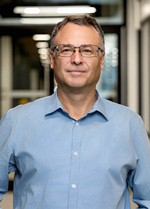 Dr. Jennewein completed his PHD in 2002 at the University of Vienna on Quantum Key Distribution and Teleportation Experiments. After a year in the automotive industry, he was a senior scientist at the IQOQI of the Austrian Academy of Sciences (2005). In 2009, he moved to Canada to take a faculty position at the University of Waterloo / Institute for Quantum Computing. In 2024, he was awarded a Canadian Excellence Research Chair for Global Quantum Internet Systems and Professor in Physics at Simon Fraser University. Dr. Jennewein’s research vision is to build capable and scalable quantum communication technology for long-range and satellite quantum networks. He initiated and leads the Canadian Satellite mission called Quantum EncrYption and Science Satellite (QEYSSat), which aims to demonstrate quantum communication and Quantum Key Distribution (QKD) between space and ground with stations across Canada and internationally. With his interest in the application of quantum technologies, he also co-funded three quantum-tech startups to develop and sell satellite-based secure communication, sensing, and research instrumentation.
