Sterling Backus
Sterling Backus
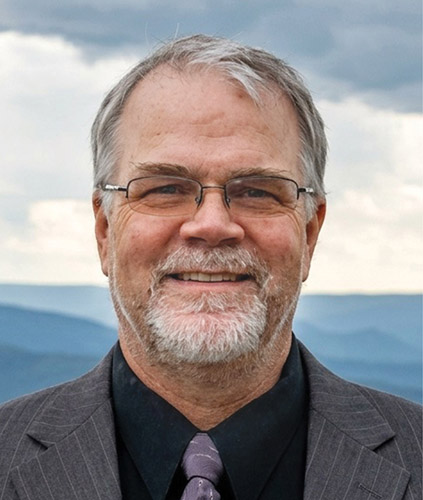
Profile
Sterling Backus started his love for optics at 17 in the US Army as an infantry soldier, always wanting to use and understand the Starlight optical night scope and MILES laser targeting system used for training. After leaving the Army, he studied engineering at Bellevue Community College in Washington State on the GI bill. After attaining his associates degree, he attended Washington State University where he received his Bachelor of Science in Physics, and completed a thesis Masters degree in physics in 1992. After graduating, he went to work for a defense contractor on laser systems for SDI (Strategic Defense Initiative) or “Star Wars.” After his industrial experience he attended WSU as a Ph.D. student, graduating with a Ph.D. in Engineering Science (combining curricula from both physics and engineering departments) in 1996. Sterling then did a post-doc at The Center for Ultrafast Optical Science at the University of Michigan, authoring several noteworthy publications on ultrafast laser development and non-linear optics focused on UV, and VUV wavelengths in collaboration with Nobel laureate Gerard Mourou, and MacArthur fellow Margaret Murnane. He then was a research associate at the University of Colorado in 1999, where he led ground breaking work on controlling quantum pathways for high harmonic generation on an attosecond time scale, work published in Nature.
Sterling joined the startup company KMLabs Inc. in 2003, and ran the research department focusing on government research grants for new product development in ultrafast amplifiers, UV, VUV and EUV, of which several products are in use around the world. In 2019, part of KMLabs was acquired by Thorlabs Inc. including Sterling as an Advanced Projects Scientist, a position he still holds today. He is responsible for researching new products, helping customers with complex experiments and local outreach in the Colorado area.
Sterling, and his son were the subject of a Christmas commercial in 2019 by Automobili Lamborghini for 3D printing a life-size Lamborghini Aventador for community outreach. He is currently an affiliate researcher at Colorado State University, serves on the Optica Meetings Council, is an Optica Fellow and is the Optica FIO program co-chair for 2026-2027. Sterling has also served as the CLEO program chair and general chair in 2017 and 2019, respectively.
Election Statement
I have been with Optica since graduate school. As a US Army veteran, I understand that service is very important and I was eager to volunteer. The welcoming environment, even for early-career photonics students, is why I believe so strongly in the mission of Optica. Starting as a reviewer and then serving as a committee member for CLEO, it became clear that this was one of the best ways to have a meaningful impact on the field of optics and photonics.
After leaving academia for industry, I served as a CLEO program and general chair, bringing the interests, concerns and support of companies supplying the infrastructure for photonics research. In my role as chief scientific officer for a small company, I was able to engage through Optica to find candidates for industrial research, and at the same time, encourage students to look at careers in the photonics industry. This has guided my career throughout the years, with Optica playing a key role. It has also allowed me to keep up with the latest research in academia, informing my own work in industry. Optica has become a world leader in creating a significant return on investment for the industrial sector, and it continues to grow worldwide.
Negotiating Geopolitical Realities for the Photonics Industry
Geopolitical impacts on the photonics industry include new tariffs, immigration issues, supply chain problems and workforce development. These are not exclusive to industry but will affect the next generation of students; helping them navigate these changing environments so they can be successful is key. Optica has played a significant role in adaptation for our community, and I hope to help continue these efforts as part of the leadership team.
Promoting Careers in Photonics
When I mention “photonics” to most students, they say, “Huh?” Therefore, getting involved in student growth from middle school through high school is very important. Explaining the ever-expanding role of light and lasers in everyday products will help students understand the massive role photonics plays in our lives and that they can become part of this industry, impacting medicine, energy production and many other areas. I hope to help Optica expand its reach to show potential students the opportunities our industry has.
Being an Advocate for Women, Underrepresented Groups, and Emerging Economies
I am committed to making sure opportunities are available to all. By using the global reach of Optica and the financial support of industry in collaboration with governments and academic institutions, we can reach potential students to join our field. By expanding the amazing Ambassadors program, women in science programs and helping those from emerging economies navigate financial and visa issues, we can help the next generation of photonics scientists see the opportunities that exist in our community.
Document Created: 01 January 0001
Last Updated: 01 January 0001
